A preventive maintenance schedule for a church building
A preventive maintenance schedule for a church building: what to do every week, month and year, timed around the church calendar, with a free Excel template.
By Tom Moore · October 27, 2026 · 11 min read
When I was the facility director at a private K-12 school in Georgia, it seemed like there was no end to the things that needed to go on our preventive maintenance list.
If you've ever been in a restroom and heard the ultra-irritating noise a squeaky stall door makes, you know that one needs to go on the list, to be greased every year. Clear lithium grease is what I found works best. The heavy traffic lanes in the carpet by each building exit needed a deep cleaning once a quarter, because dirt breaks down carpet fibers when too much time passes between cleanings.
A big one at the school was the vinyl composition tile (VCT) in the classrooms, hallways and cafeterias. It was stripped and waxed once a year, scrubbed at least once a week (more often when the weather was bad) and buffed once or twice a week. Then there were the HVAC air filters, and the list kept going.
It would have been so nice to have a software program that was one central place to track all of it, and that sent out reminders automatically when each item came due.
A church building has its own version of that list, and it's hard on a maintenance plan in its own way. It sits quiet most of the week and then fills up all at once, so a problem that starts on a Tuesday often doesn't show itself until a few hundred people are inside on Sunday morning. A preventive maintenance schedule is how you find those problems on the Tuesday instead.
It's simpler than it sounds: a list of tasks, how often each one comes due, and the name of the person who does it. Below you'll find a schedule you can start from, the timing that fits around the church year, and a free spreadsheet and printable checklist to make your own.
What goes on a preventive maintenance schedule
Preventive maintenance is the small, regular work that keeps equipment from failing: changing a filter, greasing a hinge, flushing a water heater, clearing a gutter. Repairs are what happens when that work gets skipped. A schedule keeps the small work from depending on anyone's memory.
Inspections belong on the same calendar, but they're a separate list, with certificates and deadlines set by your fire department and your state. We cover them in our church building inspection checklist. This article is about the maintenance in between.
Every week
Most of the weekly work looks like cleaning, but it's maintenance too. Floors and carpets that get cared for every week last far longer than ones that don't.
| Task | Why it matters | Who |
|---|---|---|
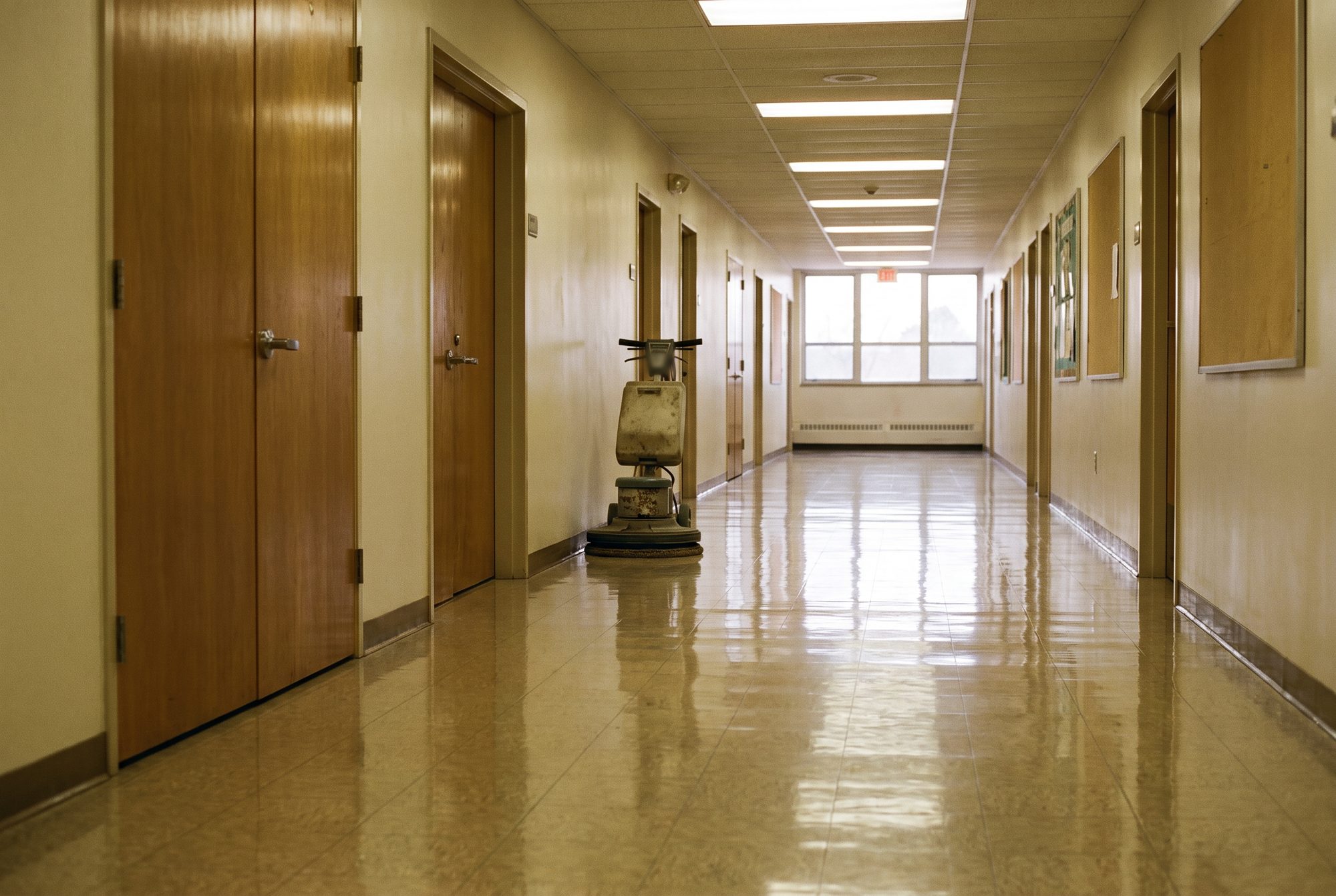
| Scrub the vinyl tile floors at the entrances and in the halls, fellowship hall and kitchen | Grit tracked in from outside wears down the floor finish. Scrub more than once a week when the weather is wet or snowy | Your custodian or cleaning company |
| Buff the vinyl tile floors, once or twice a week | Buffing keeps the finish hard and glossy, so it lasts until the yearly strip and wax | Your custodian or cleaning company |
| Vacuum the carpet | Dirt you can't see grinds down carpet fibers. Do the entrances and busy walkways every day the building is used | Your custodian, cleaning company or volunteers |
| Check the restrooms | Running toilets, dripping faucets, empty dispensers and stall doors that squeak or won't latch | Whoever cleans them |
Every month
| Task | Why it matters | Who |
|---|---|---|
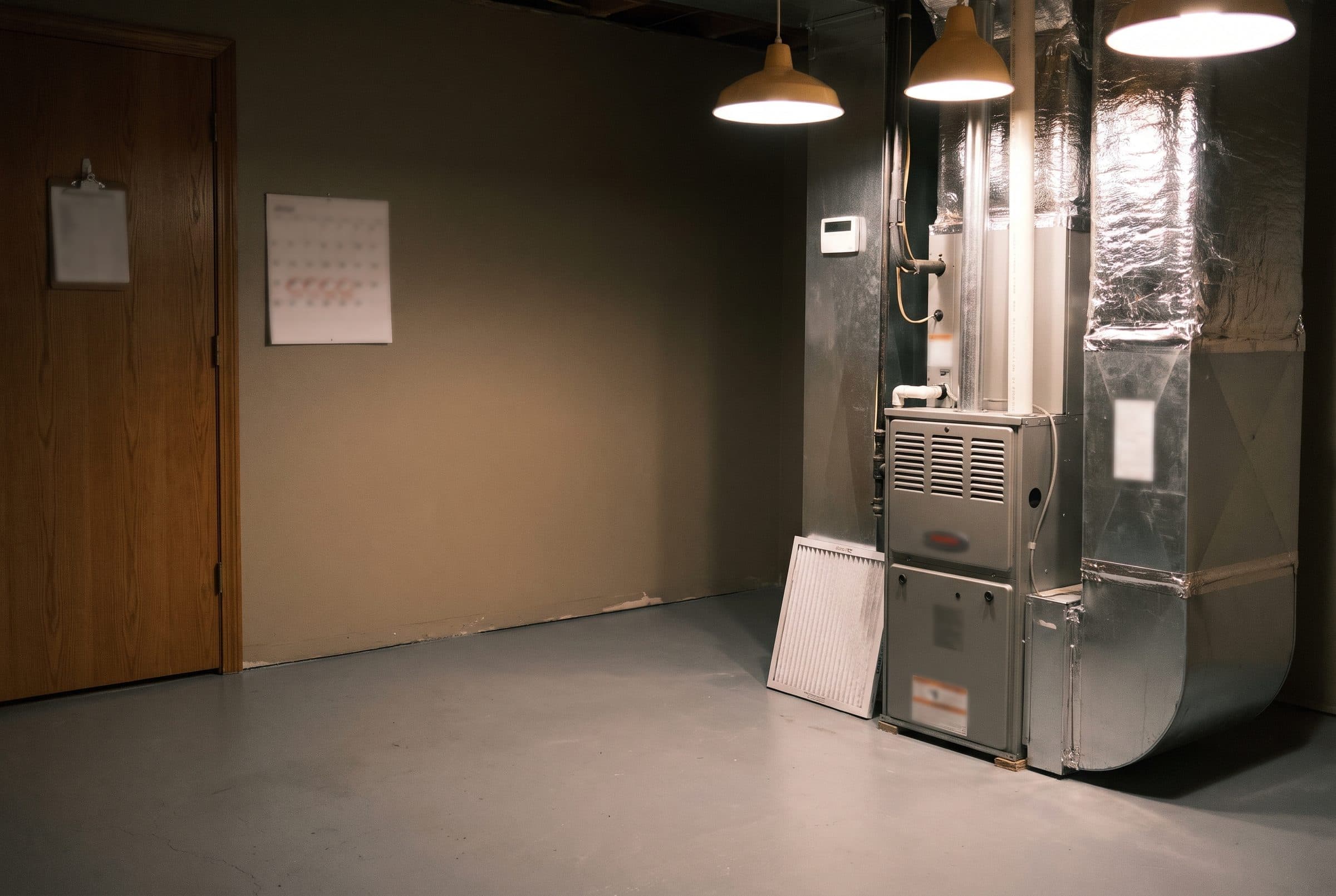
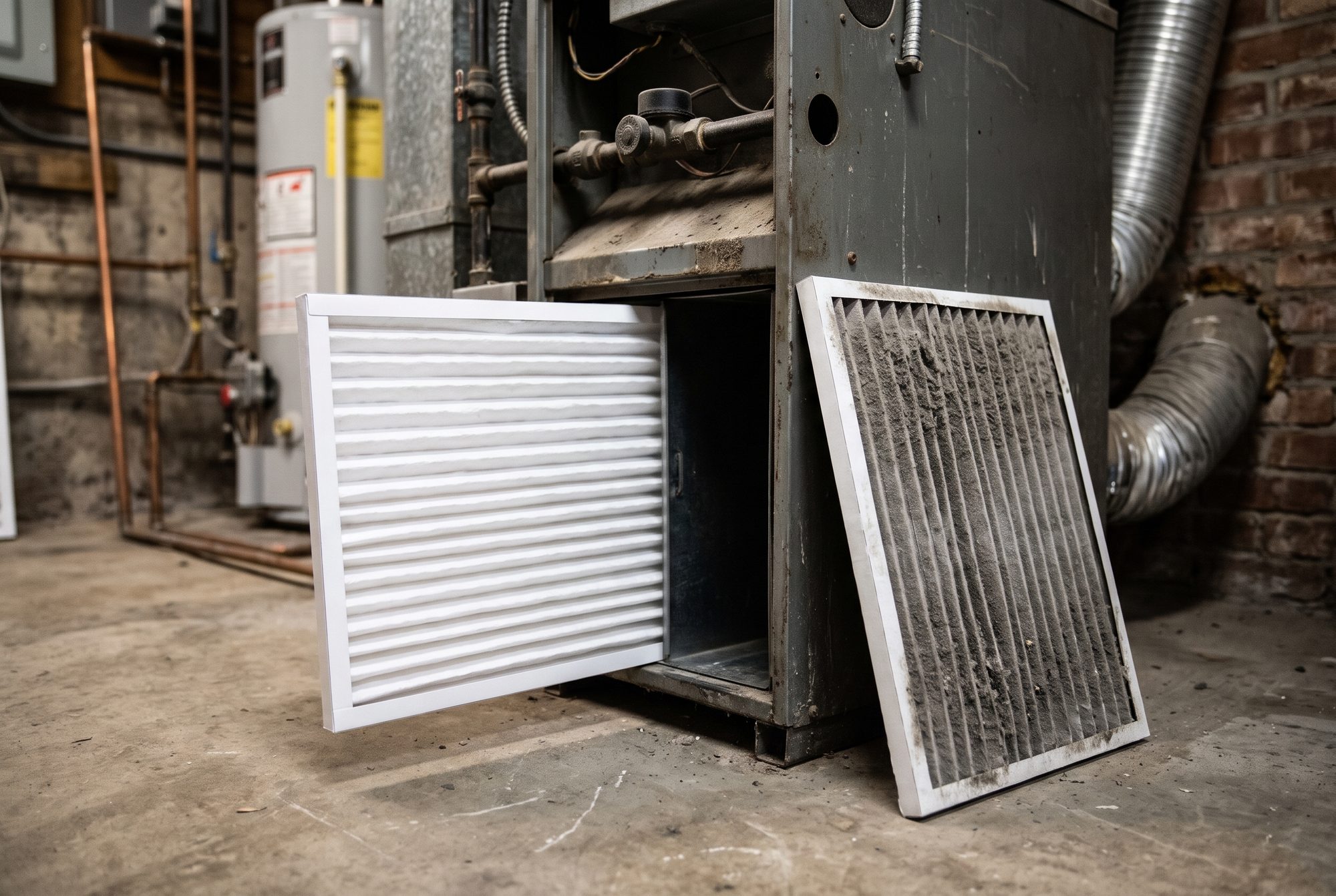
| Check the HVAC filters and change any that look dirty | A clogged filter makes the system work harder and wears it out early. ENERGY STAR says to check every month and change at least every three months | You or a volunteer |
| Walk the whole building | Ceiling stains, drips under sinks, burned-out lights and doors that won't latch are cheaper this week than next month | You |
| Run the water in rooms nobody used | A sink or floor drain that sits unused lets its trap dry out, and sewer gas comes up into the room. A minute of water, and a flush of any unused toilet, keeps it sealed | You or a volunteer |
| Test the emergency lights and look over the fire extinguishers | Both are monthly checks under the fire code, covered in our inspection checklist | You |
| Look at the sprinkler valves and gauges, if you have sprinklers | A valve left shut or a gauge reading low can keep the sprinklers from working. If anything looks off, call your sprinkler company. The quarterly and yearly checks are in the inspection checklist | You |
| Look over the kitchen hood's fire suppression system | The pull handle should be clear, the seals and service tag in place and the gauge in the green. It's the owner's monthly check between the company's six-month visits; here's a fire district's checklist | You or your kitchen volunteers |
| Test the smoke and carbon monoxide alarms that aren't part of a fire alarm system | The Minnesota State Fire Marshal says to test both every month and change their batteries once a year. Replace smoke alarms every 10 years and CO alarms every five to seven | You |
| Check the AED | The ready light should be on and the pads and battery within their dates. Follow your AED maker's instructions; here's a sample monthly checklist | You |
| Run the generator, if you have one | A standby generator should run under load for about 30 minutes every month, under the NFPA 110 standard | You or your generator company |
| Look over the playground, if you have a preschool | Loose hardware, worn surfacing and sharp edges. The CPSC's playground handbook has an inspection checklist | Your preschool director or you |
Every three months
| Task | Why it matters | Who |
|---|---|---|
| Change any HVAC filter that hasn't been changed yet | That's the three-month limit, even if a filter still looks clean | You or a volunteer |
| Deep clean the carpet traffic lanes by each entrance | Dirt breaks down carpet fibers when too much time passes between deep cleanings, and the lanes by the doors get the most of it | Your cleaning company |
| Check door closers, locks and panic bars | A door that doesn't close and latch is a security problem, and on a fire door it's a code problem | You |
| Test the sump pumps and look at the floor drains | Better to find a dead pump before a heavy rain than during one | You |
| Clean the kitchen hood filters | Grease builds up even in a kitchen that mostly does potlucks. Clean them more often if your kitchen is busy | Your kitchen volunteers |
| Have the building treated for pests | Most commercial pest control is quarterly. A busy kitchen or a preschool may need it monthly | A pest control company |
| Check and restock the first aid kits | Replace what's been used or has expired, especially in the nursery, the kitchen and the preschool | You or a volunteer |
Twice a year
| Task | Why it matters | Who |
|---|---|---|
| Have the HVAC serviced: cooling in spring, heating in fall | Contractors are busiest in summer and winter, which is why ENERGY STAR suggests spring and fall | Your HVAC contractor |
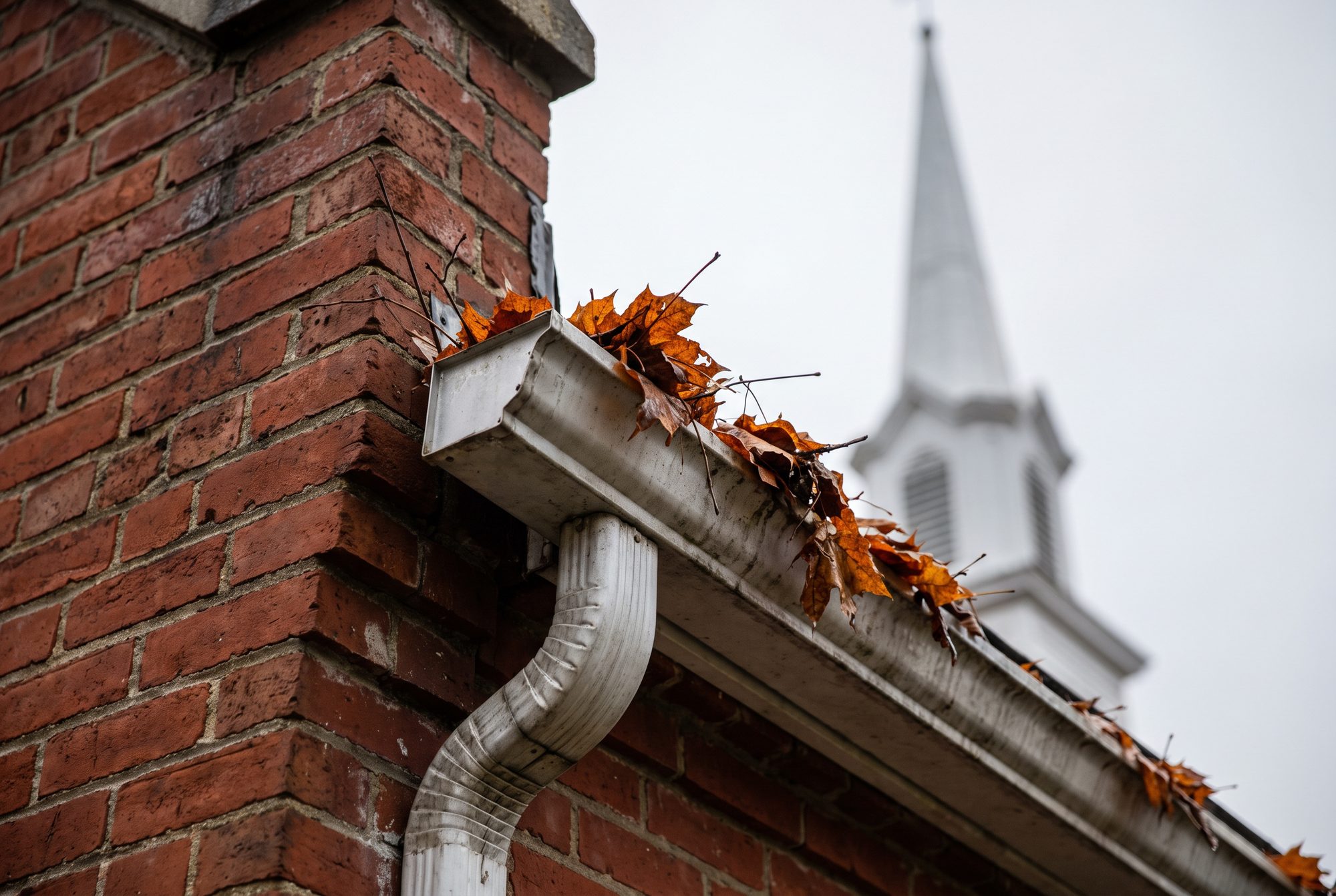
| Inspect the roof, and clean the gutters and roof drains | The National Roofing Contractors Association recommends a look every spring and fall, and another after any big storm | A roofer for the roof; you or a volunteer for gutters you can reach safely |
| Service the kitchen hood fire suppression system | It's due every six months; see the inspection checklist | A kitchen fire suppression company |
| Look over the fire alarm, and have its backup batteries tested | Between yearly tests, the alarm panel, pull stations, detectors and horns get a look every six months, and the batteries that run the system in a power outage get tested. Minnesota's health department explains both | You for the look; your fire alarm company for the batteries |
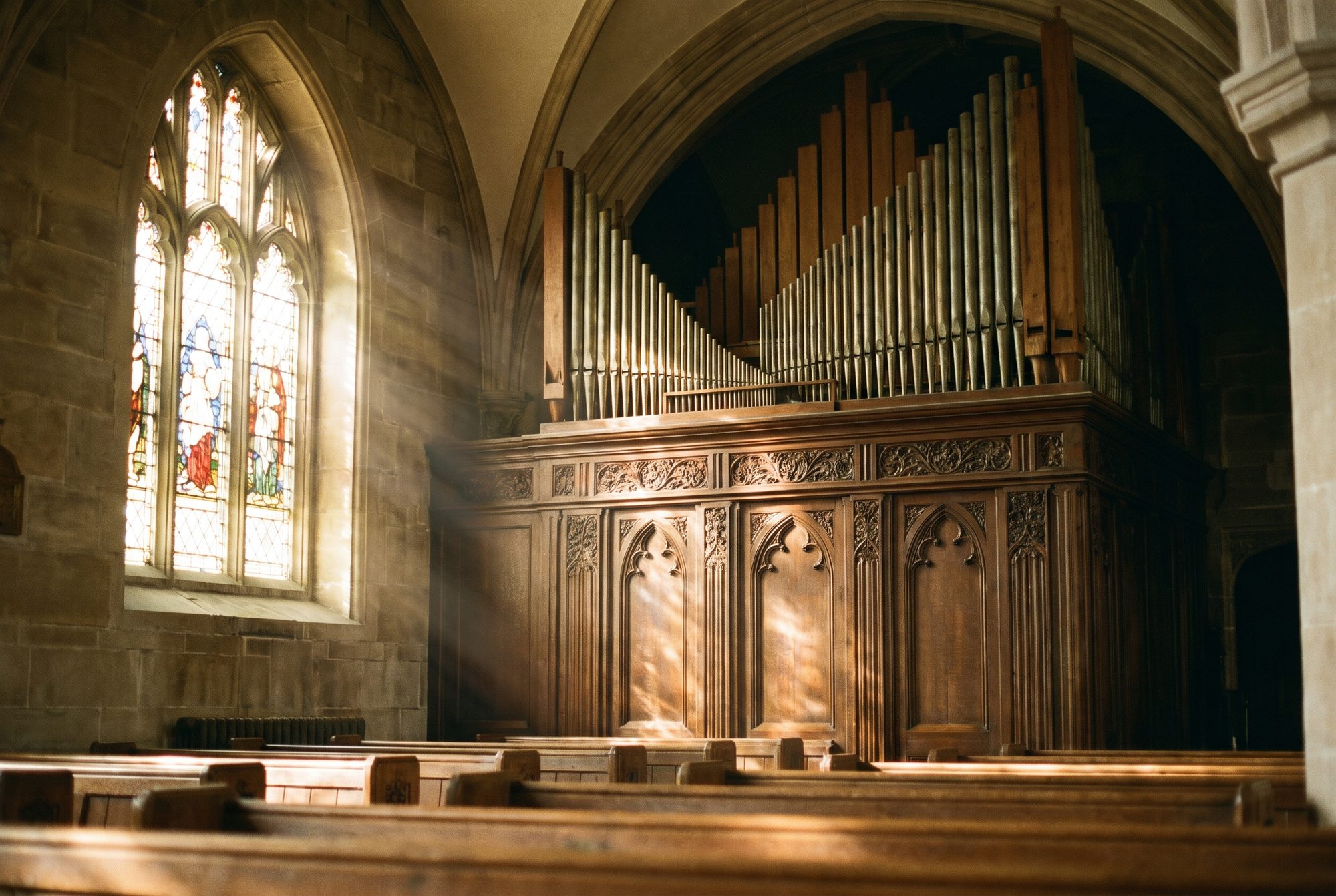
| Tune the pipe organ | Organs drift with the seasons, so many churches have them tuned twice a year, often before Easter and before Christmas | Your organ technician |
| Reset the thermostat schedules, light timers and clocks when the clocks change | Daylight saving time throws off every schedule in the building, twice a year. It's an easy day to remember the yearly alarm battery change, too | You |
| Clean and sanitize the ice machine, if you have one | Scale and mold build up inside, and most makers say to clean it at least every six months | Your kitchen volunteers or a refrigeration company |
Once a year
| Task | Why it matters | Who |
|---|---|---|
| Strip and wax the vinyl tile floors | The worn, dirty finish comes off and fresh coats go on. Summer, when the building is at its emptiest, is the usual time | Your cleaning company |
| Deep clean all the carpet | The traffic lanes get theirs every three months, and the rest of the carpet usually needs it about once a year | Your cleaning company |
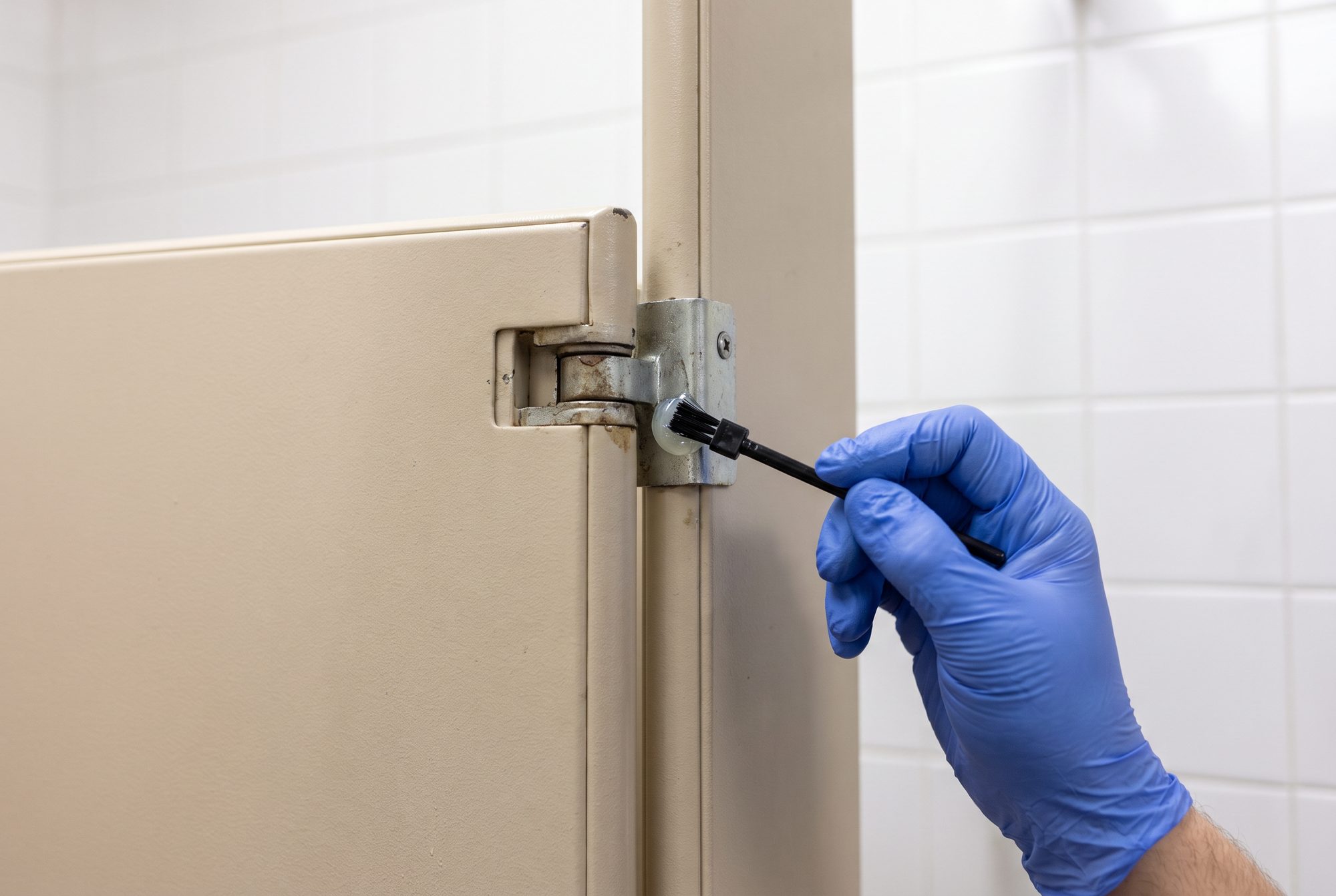
| Grease the restroom stall door hinges | A little clear lithium grease keeps them quiet. It's the easiest complaint you'll ever prevent | You or a volunteer |
| Flush the water heater | Sediment settles in the tank and shortens its life, so most plumbers recommend flushing it at least once a year | You or a plumber |
| Look over the outside of the building | Caulking, paint, brick, window seals and sidewalks that have settled, once winter is over | You |
| Trim trees and bushes back from the roof, gutters, walks and lights | Branches wear the roof and fill the gutters, and overgrown bushes hide trip hazards and dark corners | You, volunteers or a tree service |
| Seal the cracks in the parking lot | Water in a crack turns it into a pothole after a freeze | A paving company |
| Account for every key, fob and door code | Keys handed out over the years add up. Collect the ones that should come back, and change the codes when people leave | You |
| Book the yearly inspections | The fire alarm, sprinklers, extinguisher service, the 90-minute emergency light test, backflow testing and the kitchen hood's grease inspection are all in the inspection checklist. So are boiler and elevator inspections, which come due by the date on each certificate | Licensed contractors |
| Inspect the fire doors | Fire doors, like the ones to stairwells and the boiler room, have a rating label on the hinge edge. The national standard for fire doors, NFPA 80, calls for a yearly inspection of the labels, any damage and the gaps around each door, and a test that it closes and latches on its own | You or a door company |
Carpet is the one item that runs at three speeds. The cleaning industry's own guidance is to vacuum the walkways every day the building is used, clean the entrances several times a year, and do a full deep cleaning only when the carpet needs it. For most churches, that works out to the weekly vacuuming, the traffic lanes every three months and everything else about once a year.
Every few years
Some jobs come around less often, but they still belong on the schedule so they don't get forgotten:
- Seal coat the parking lot.
- Repaint the busiest halls and classrooms.
- Replace the AED pads and battery by the dates printed on them.
- Plan for the big replacements: the roof, the rooftop units, the boiler and the water heaters. Write down when each one was installed and how long it's expected to last, so its replacement shows up as a line in next year's budget instead of an emergency.
Time it around the church year
A church calendar has its own rhythm, and the schedule works better when it follows that rhythm.
| When | What to schedule | Why then |
|---|---|---|
| January and February | The inside projects: painting, small repairs and whatever you noted on your walk-throughs | Christmas is over and the building is quiet |
| Before Easter | The spring HVAC service, the roof and gutters, the parking lot after winter, and an organ tuning | Easter brings the biggest crowd of the spring |
| Summer | The big jobs: stripping and waxing the floors, cleaning the carpets, painting, roof repairs and parking lot work | School and preschool are out, and the building is at its emptiest |
| Before the fall kickoff | The heating service, a test run before the first cold Sunday, the gutters once the leaves are down, and winterizing | The building fills back up, and the cold comes soon after |
| Before Christmas | An organ tuning, the lights inside and out, and a plan for snow and ice | Christmas Eve may be the fullest the building gets all year |
Put volunteers to work
Volunteers can carry a lot of a church's maintenance, and a schedule makes them far more useful. Give each one a specific job with a short checklist, like the monthly filter check or the walk-through, rather than "come help on Saturday." Keep the licensed work, like electrical, gas, fire systems and boilers, with licensed contractors, and keep anyone off a ladder or a roof who shouldn't be on one. And have everyone write down what they did, because the record is half the value.
Write down what you did
The schedule tells you what's due. The record tells you what happened: the date, who did it, what they found and what it cost. It's what your insurance company, an inspector or the next person in your job will ask for, and it's how you'll notice that the rooftop unit over the fellowship hall has needed a new belt three times this year.
A free template to start from
We've put this whole schedule into a spreadsheet you can download and make your own: the church preventive maintenance schedule (Excel). It opens in Excel, Numbers or Google Sheets, with a row for every task, how often it comes due, who does it, and when it was last done.
If you'd rather work on paper, there's also a printable checklist (PDF) to keep on a clipboard in the mechanical room.
Keeping track of it all
A spreadsheet works until someone forgets to open it, and that's the gap I wanted closed back at the school. In WiseHQ, the maintenance schedule puts a work order in front of the person or team assigned ahead of each due date, and the record keeps itself, with the date, who did the work, their notes and photos. Anyone who notices a problem in between can report it by scanning the QR code in the room. See how WiseHQ works for churches.
Where to start
- Walk the building and list what you have: the HVAC units, water heaters, roof, kitchen equipment, generator and AED, and which floors are carpet and which are tile.
- Start with the monthly items. They take an hour or two and catch the most.
- Put a name next to every task.
- Book the big jobs into the church year: before Easter, in the summer and before the fall kickoff.
- Write down what you did, every time.
I built my list one squeaky stall door at a time. You can start from this one, and once every task is on a schedule, the stall doors get greased before anyone hears them.
Let the schedule do the remembering
WiseHQ puts each task in front of the right person before it's due, and every finished work order keeps its own record: the date, who did the work, their notes and photos.