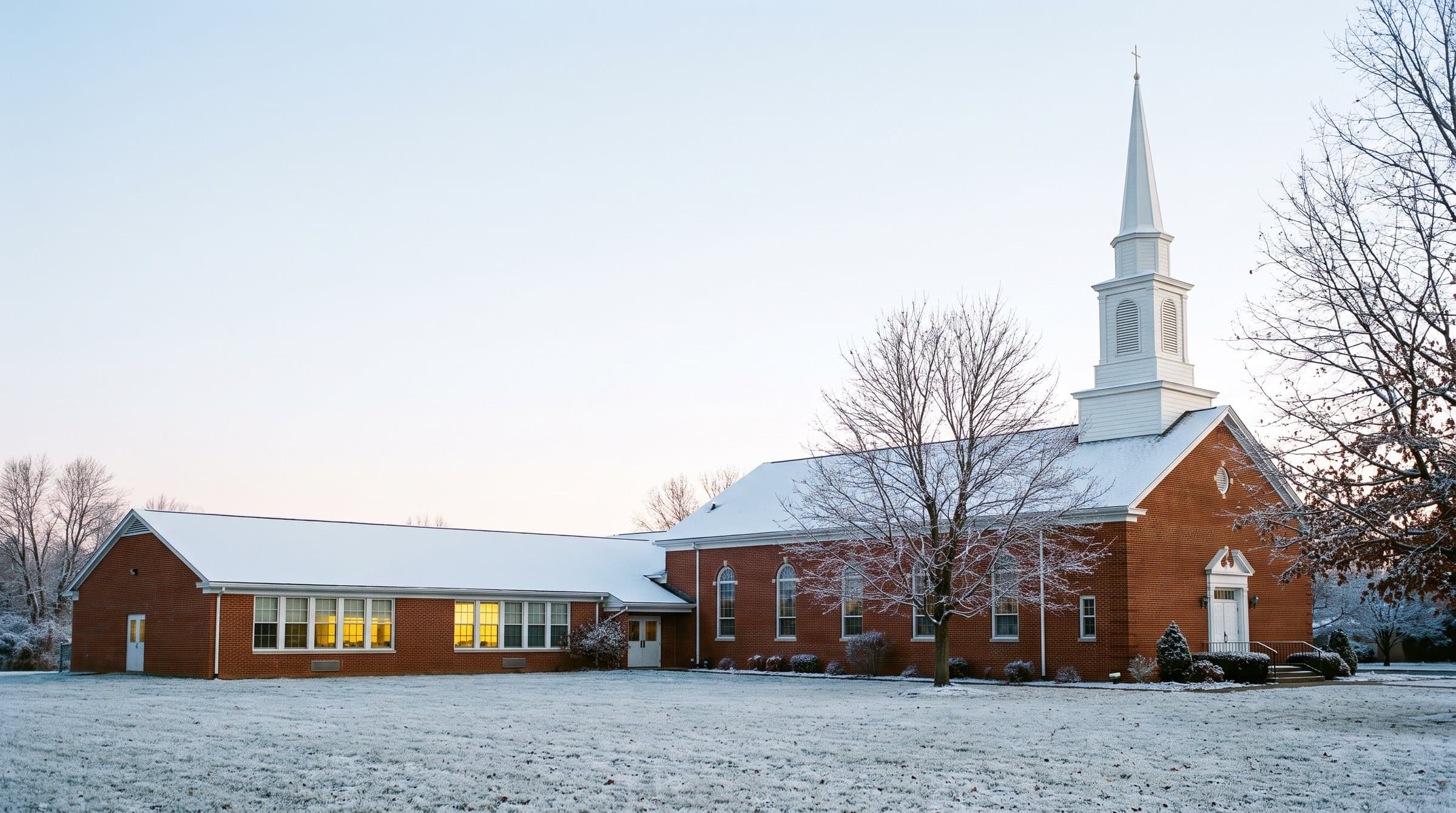
How to winterize your church building
A winter checklist for church buildings: keep the heat above 55, protect pipes and sprinklers, service the boiler, and have classrooms warm by Monday morning.
By Tom Moore · October 17, 2026 · 8 min read
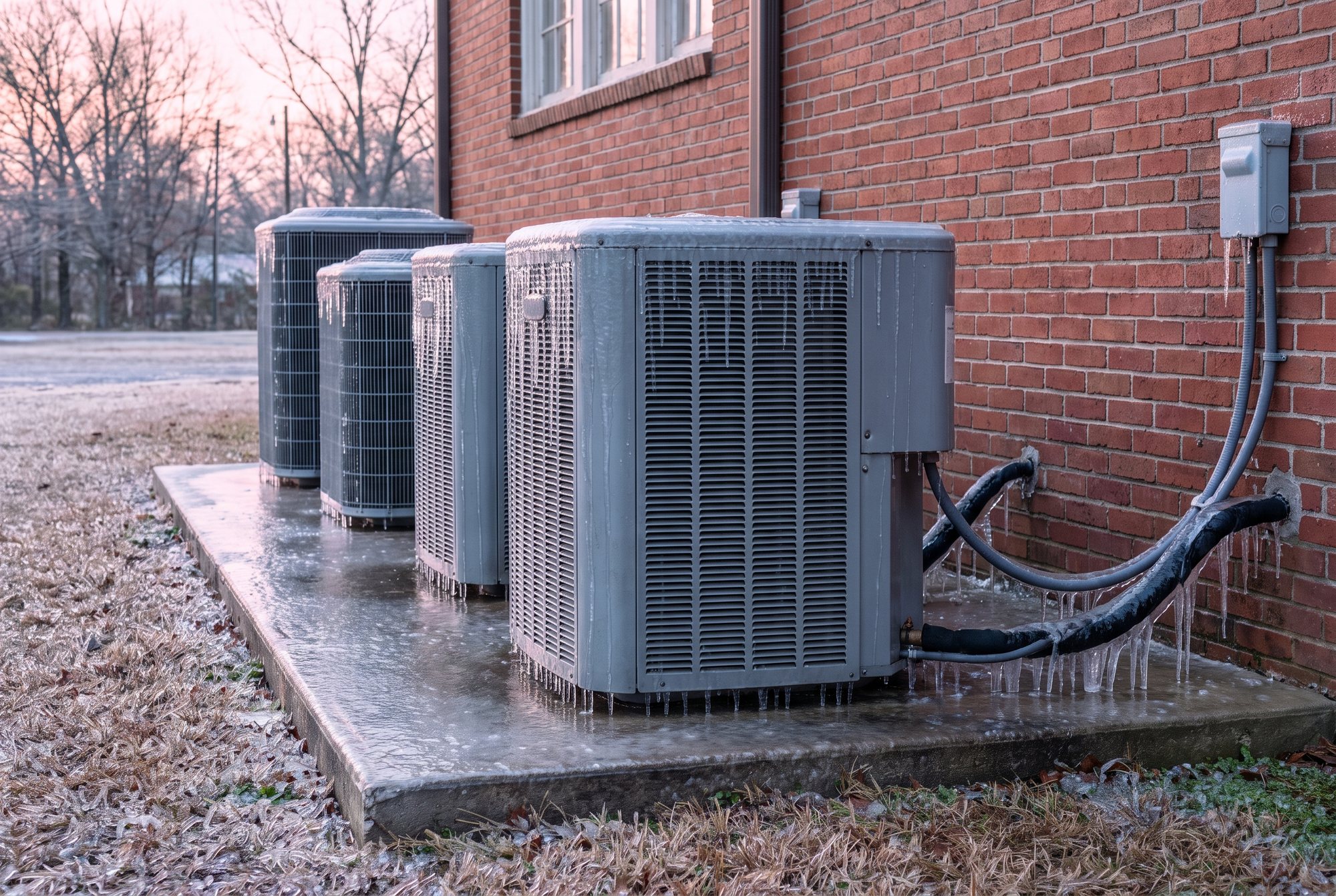
My first winter as a facility manager was at a private school in Georgia. You wouldn't think a Georgia winter could do much harm to a building, but one morning the temperature dropped below 20 degrees, and when I got there early I found ten of our outdoor AC units iced over and frozen under about four inches of ice. I drove to the hardware store, came back with a torpedo heater, and to my surprise it actually worked.
Thawing them out turned out to be the easy part. Those units had been made in Germany and their parts weren't available anymore, so getting them running properly again meant working with a local HVAC technician who could track down custom parts. That was quite an education for a new facility manager, and I'll never forget that winter in Georgia. I hope the units at your building are ones you can still get parts for.
Most church buildings won't meet that exact problem, but they meet its cousins every year. A church gets heavy use on a few days and sits nearly empty on the rest, so the rooms nobody uses in January are exactly where a pipe can freeze for days before anyone notices. If your building also holds a school or a daycare, Monday morning carries more weight, because the children arrive whether the heat came on in time or not. This guide walks through how to winterize a church building before the first hard freeze, roughly in the order you'd do it, and ends with a checklist you can hand to whoever helps you.
Keep the heat at 55 degrees, even in rooms nobody is using
Church Mutual, which insures churches, puts it plainly in its winter guidance on frozen pipes: "A cold building is the single greatest risk factor for frozen pipes." Its advice is to keep the building above 55 degrees and not to turn the heat off completely, even when the building will sit empty for a long stretch.
That can sound like it works against saving energy, but the two fit together. ENERGY STAR's checklist for worship facilities recommends smart thermostats with a setback policy for when the building is empty, and warming a space up about an hour before people arrive. So make 55 the lowest setting anywhere in the building, including the wing you only open at Christmas, and then schedule each area to warm up before it's used.
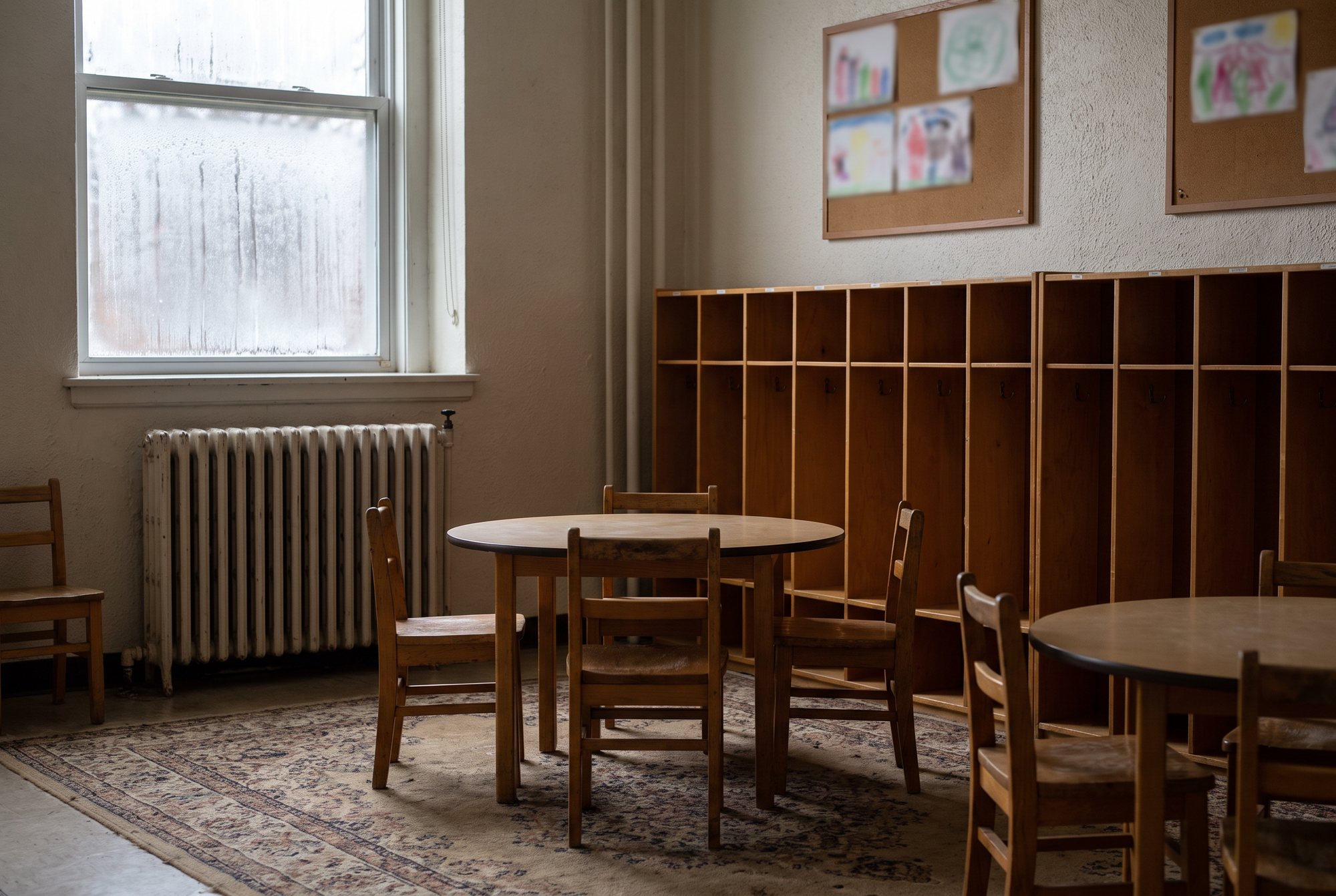
Classrooms need the most thought. A room that has sat at 55 since Friday afternoon can take a lot longer than an hour to feel comfortable on Monday, so set the education wing to start warming earlier on school mornings than the sanctuary does on Sunday, and check the rooms with a thermometer on the first cold Monday instead of trusting the schedule. If you run a preschool or daycare, the bar is higher. Maryland's child care office, following the national Caring for Our Children standards, calls for a draft-free 68 to 75 degrees in winter, and your own state's child care rules are the ones an inspector will hold you to, so it's worth looking them up (in Indiana, that's FSSA).
How to prevent frozen pipes in a church building
Pipes don't freeze evenly across a building. According to the Insurance Institute for Business & Home Safety (IBHS), unprotected pipes generally begin to freeze when it drops to about 20 degrees outside, and the ones at risk are the ones in the coldest corners. Buildings in places that rarely see a hard freeze, like my school in Georgia, are often the most exposed, because nobody built them with one in mind.
Walk the building with that in mind and look for water lines in the places that get coldest: closets and restrooms on outside walls, crawl spaces, pipes above the ceiling near the roof, the far end of a wing that's closed all week, and the supply line to the baptistry if it runs through an exterior wall. Outside, disconnect the hoses, drain the outdoor faucets and have the irrigation system blown out, along with its backflow preventer, which is easy to forget because nobody looks at it until spring.
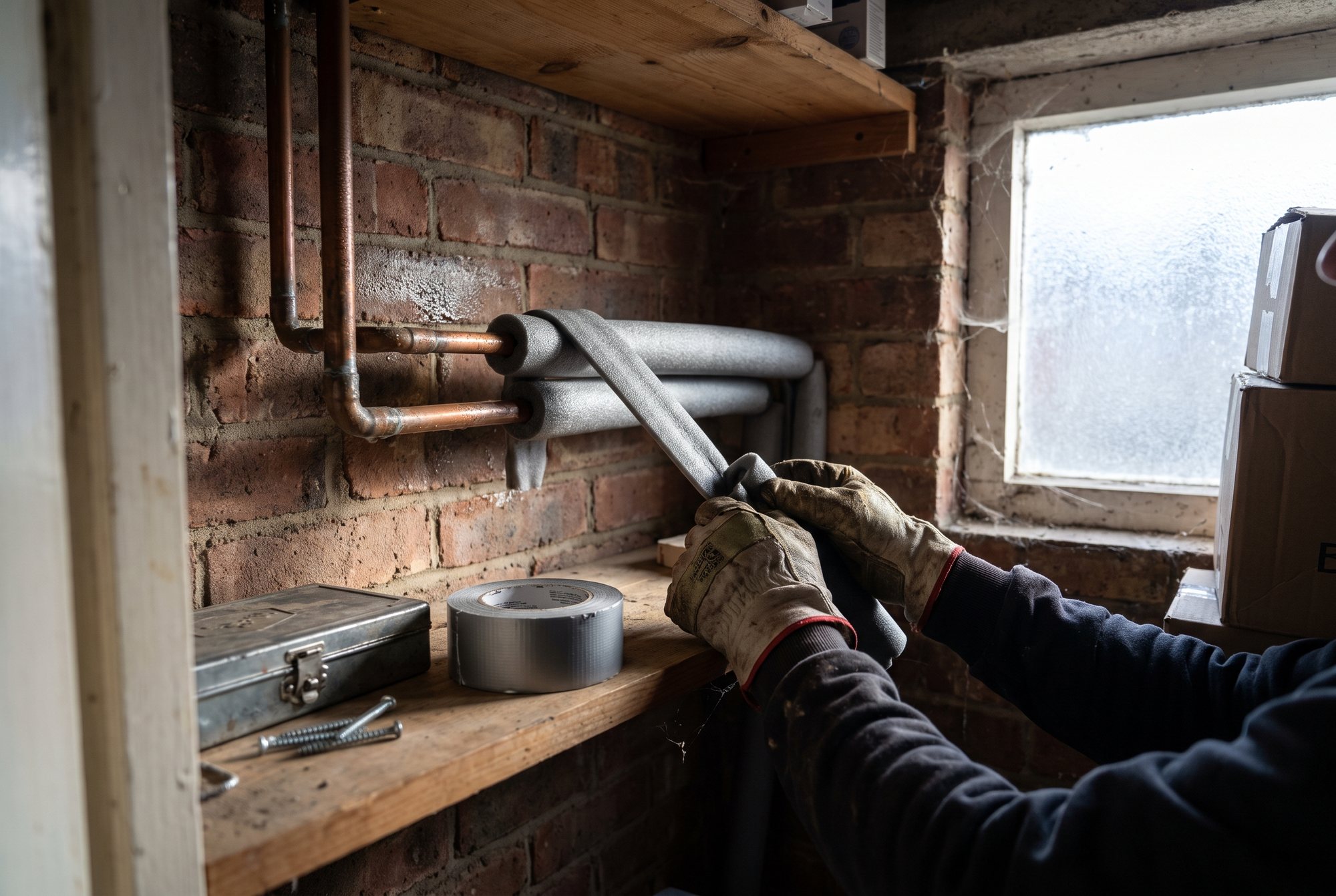
Insulate what you can reach, since foam pipe sleeves are cheap and quick to fit, and ask a plumber about heat cable for any stretch you can't keep warm. On the coldest nights, Church Mutual also recommends opening the cabinet doors under sinks so warm air can reach the pipes, and letting a faucet drip to relieve the pressure.
Protect the fire sprinklers from freezing
Sprinkler pipes are full of water too, and they're easy to overlook because nobody ever turns them on. IBHS warns in its winter guide that plumbing and interior sprinklers can freeze in extreme cold, particularly during power outages. The sprinkler standard that fire codes rely on, NFPA 13, expects water-filled sprinkler piping to sit in spaces kept at 40 degrees or warmer, and the Texas State Fire Marshal's office has warned that branch lines running inside the insulated space of an exterior wall generally don't meet that. A frozen sprinkler line can crack a fitting, and then you have a flood and a fire system that doesn't work.
If any part of your system runs through a cold space, such as an attic, a covered entrance or a closet on an outside wall, ask your fire protection contractor to look at it before the first hard freeze. If you have a dry system protecting an unheated area, that's a job for them as well, since it has drains that need attention through the winter.
Have the boiler or furnace serviced before winter
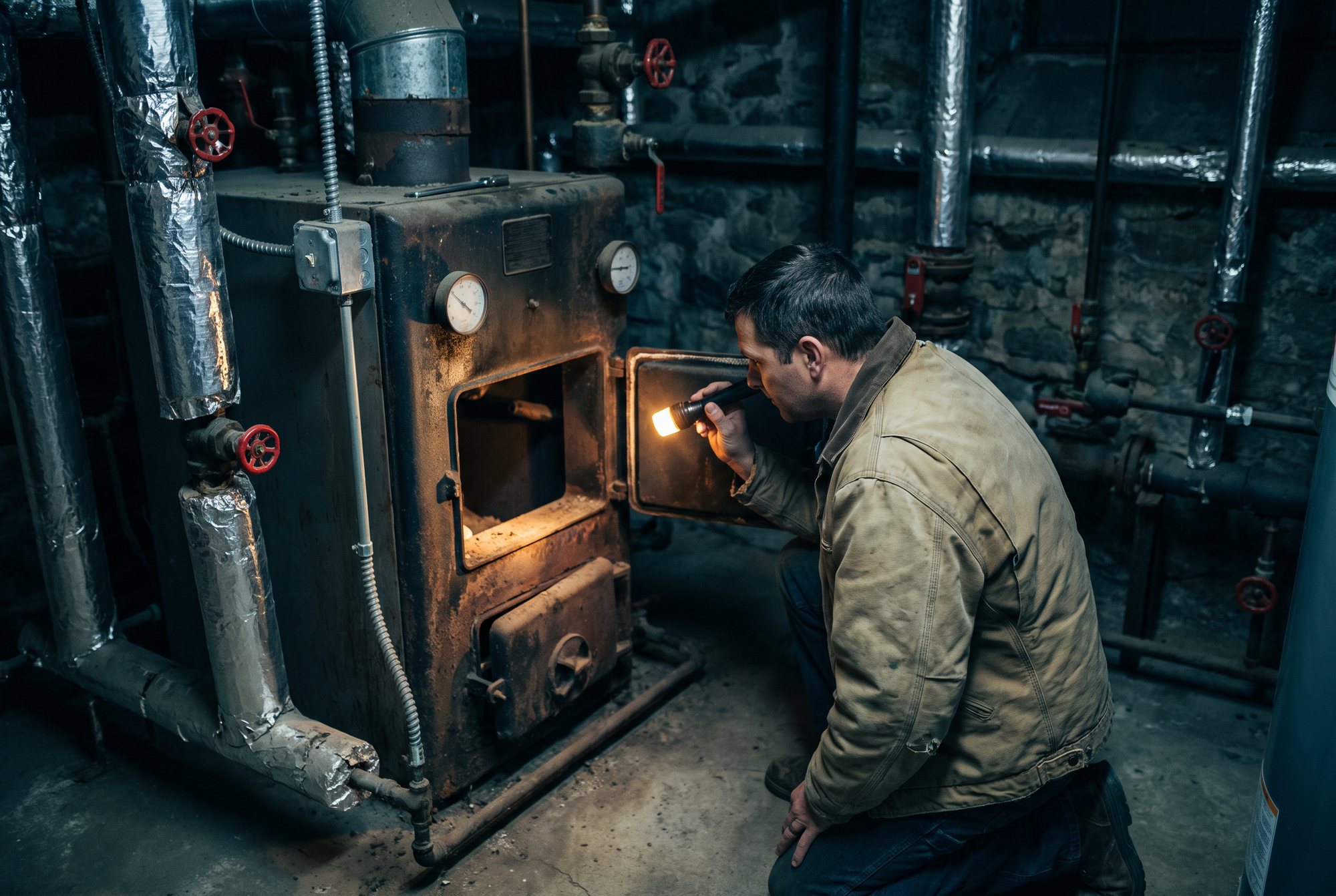
The CDC recommends having your heating system, water heater and any other gas, oil or coal burning appliances serviced by a qualified technician every year, along with a battery-operated carbon monoxide detector that you check when the clocks change. Book it in early fall, before the first cold Sunday, when every HVAC company in town is suddenly busy.
While the technician is there, check the date on the boiler's certificate in the mechanical room (our guide to finding every inspection date on a church building explains where to look), and ask the question my Georgia story is really about: which of your units are getting old, and can you still get parts for them? If the answer is no, it's far better to find out in October than on a freezing morning in January.
Keep space heaters out of the classrooms
When a room is cold, somebody will bring in a space heater, and that's worth treating as a sign the heating system needs attention. ENERGY STAR's checklist suggests discontinuing personal heaters in spaces that already have heating. If one has to run for a while, the U.S. Fire Administration's advice is to keep anything that can burn at least 3 feet away from every heat source, space heaters included. A fuel-burning heater like the one I used on those AC units belongs outdoors, never in a room where people are.
Clear the gutters and roof drains
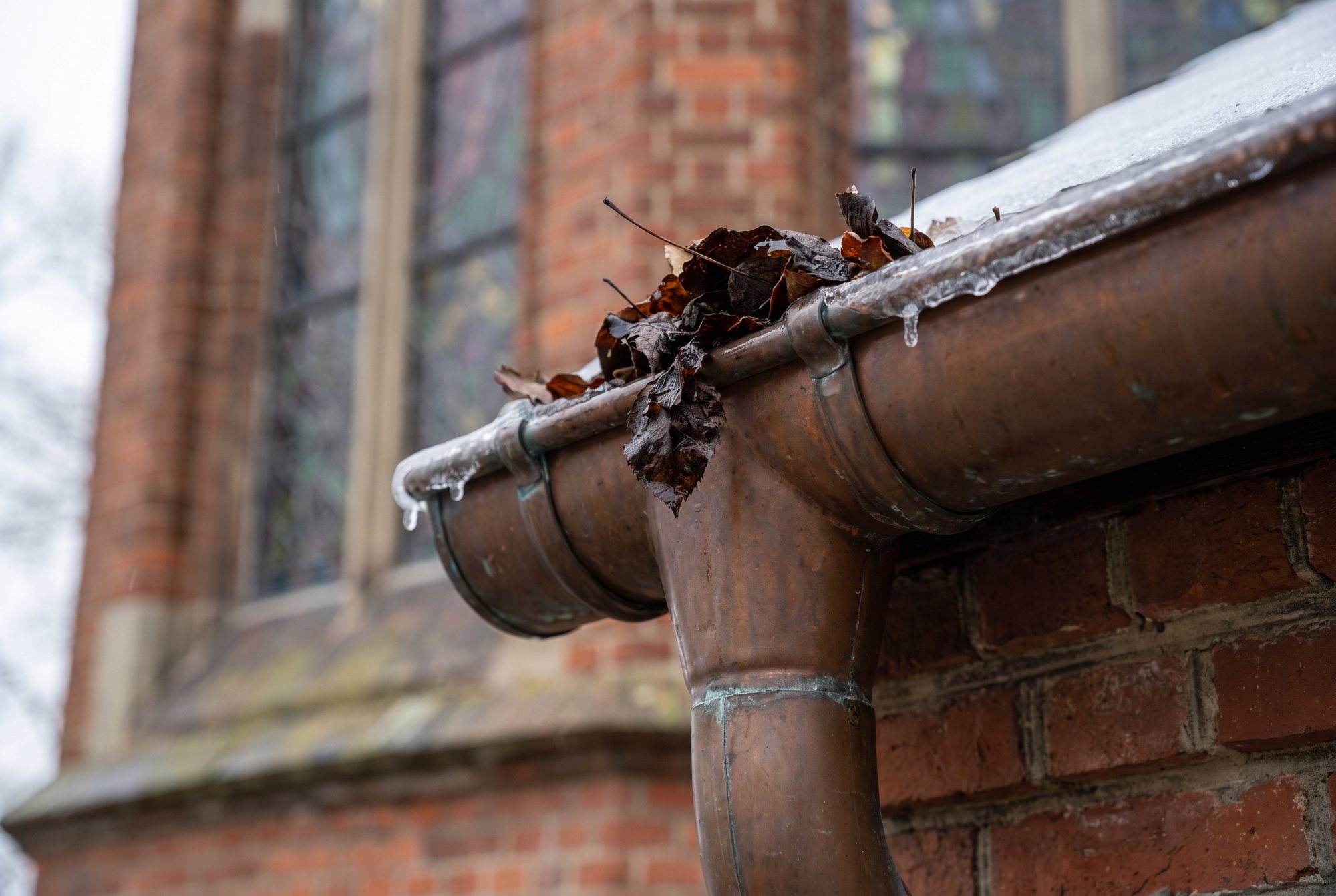
Leaves that land in the gutters in October turn into ice in December. Clogged gutters, downspouts and roof drains hold water at the roof edge, where it freezes and backs up, and an education wing with a flat roof depends on its drains to get rid of melting snow. Clean everything once the trees are bare, and after a heavy snow, have someone check that the drains on any flat roof are clear.
Plan who clears the snow and ice on Sunday morning
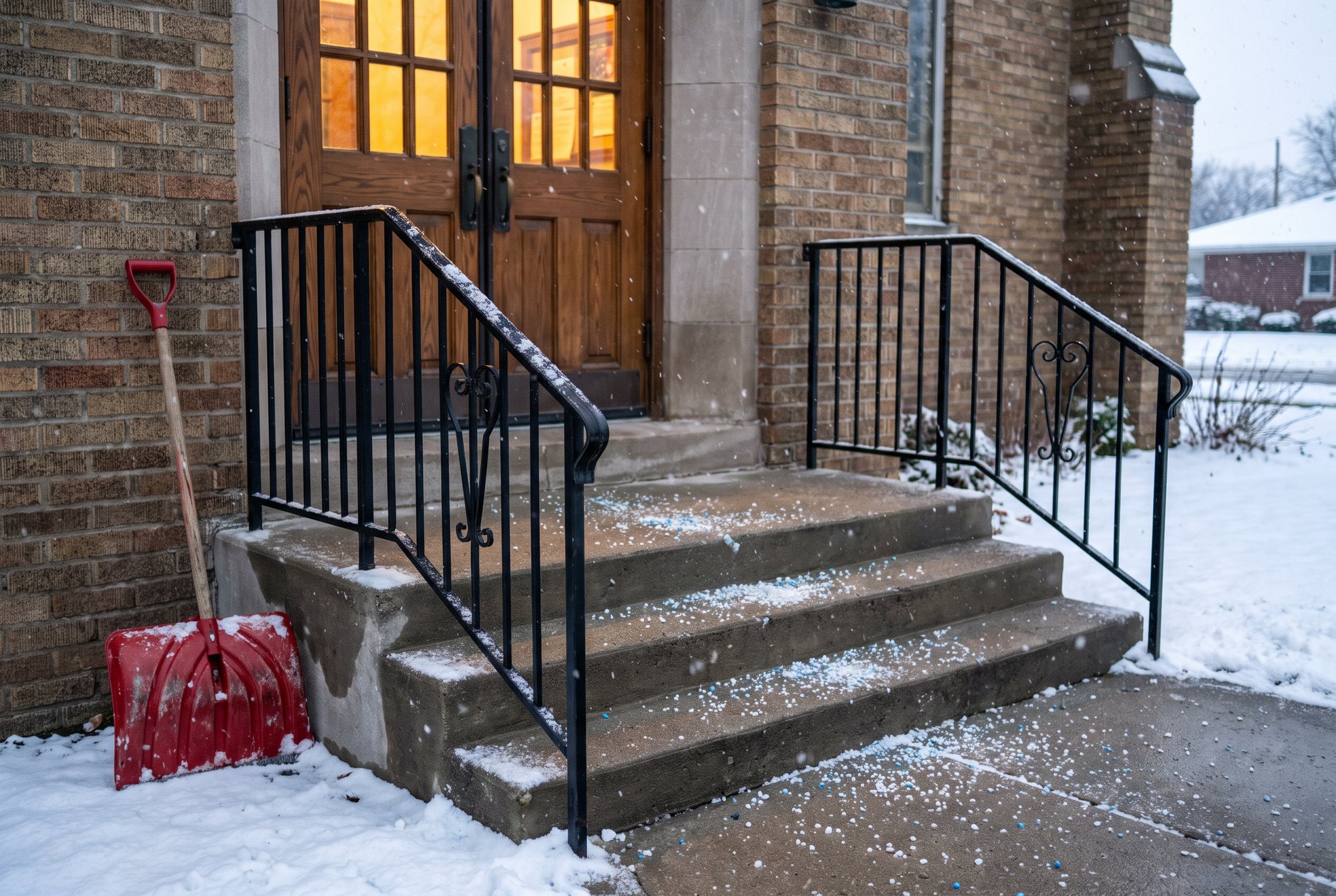
Snow and ice on the walk are a safety problem long before they're a maintenance one. Decide ahead of time who clears and salts the walks before the first service and, if you have a school, before morning drop-off, because those are usually different mornings and different people. Stock ice melt before the first storm instead of after it, put mats inside the main doors, and check the outside lights, since winter services and evening events start and end in the dark.
Know where to shut off the water
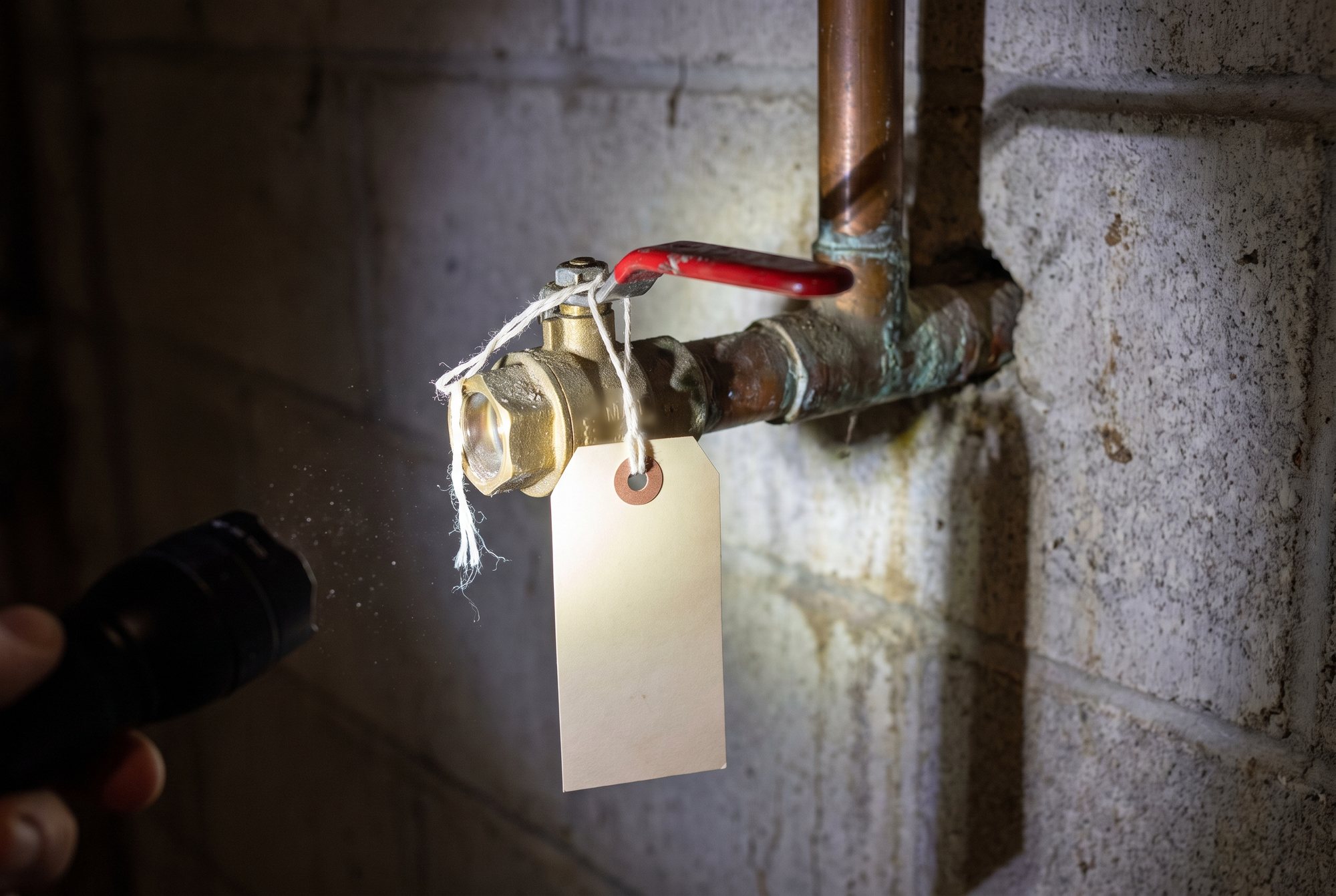
If a pipe does burst, the minutes before the water is off decide how much damage you have. Find the main shutoff and any shutoffs for individual wings, tag them, and make sure more than one person knows where they are, along with the number of a plumber who answers on weekends. Church Mutual's advice is to turn the water off immediately and call a plumber if a pipe bursts, and to open the faucets on a frozen line to relieve the pressure before it splits.
Insurers that cover churches see the cost of this every winter. After Winter Storm Elliott in December 2022, Brotherhood Mutual received 1,300 claims within a week, 963 of them tied to frozen pipes, and GuideOne received 257 frozen-pipe claims in the days that followed, according to Church Law & Tax. It's worth asking your own insurer what they offer, too. Church Mutual, for example, provides a temperature alert sensor to eligible customers at no extra charge, which warns you when a building is getting cold enough to freeze pipes.
Put the winter jobs on your maintenance calendar
Almost everything here happens at the same time every year, which makes it easy to schedule and just as easy to forget once the person who always did it moves on. Book the heating service for early October, the irrigation blowout and hose shutoff for late October, the gutters for when the leaves are down and the sprinkler check before the first hard freeze, and give each job to a named person.
That's what preventive maintenance in WiseHQ, our facility management software for churches and schools, is for. Each of these jobs becomes a recurring task that turns into a work order on its date, assigned to the person who does it, so the schedule survives staff changes. And when a teacher walks into a cold classroom on a Monday morning, they can scan the QR code by the door and report it in a few seconds, and it goes straight to the right person with the room already on it.
Your church winter maintenance checklist
- Make 55 degrees the lowest thermostat setting anywhere in the building, including empty wings.
- Schedule classrooms to warm up early enough on school mornings, and check them with a thermometer.
- Insulate pipes on outside walls, in crawl spaces and above ceilings.
- Disconnect hoses, drain the outdoor faucets and have the irrigation system blown out.
- Have the boiler or furnace and the water heaters serviced, and test the carbon monoxide detectors.
- Ask your fire protection contractor to check any sprinkler piping in a cold space.
- Clean the gutters, downspouts and roof drains once the leaves are down.
- Stock ice melt and decide who salts the walks before services and school drop-off.
- Tag the main water shutoff and make sure more than one person knows where it is.
- Ask your insurer about temperature alert sensors.
None of it takes long, and all of it costs a lot less than a burst pipe above the fellowship hall or ten frozen AC units on a freezing morning.
Know about the cold classroom before the children do
WiseHQ turns your winter checklist into work orders on the right dates, and a teacher who finds a cold room can report it in seconds by scanning the QR code by the door.