Sharing church space with a school, preschool or renters
How to share church space with a weekday school, preschool or renters: Sunday-to-Monday room resets, the church bus, facility use agreements and one calendar.
By Tom Moore · October 19, 2026 · 8 min read
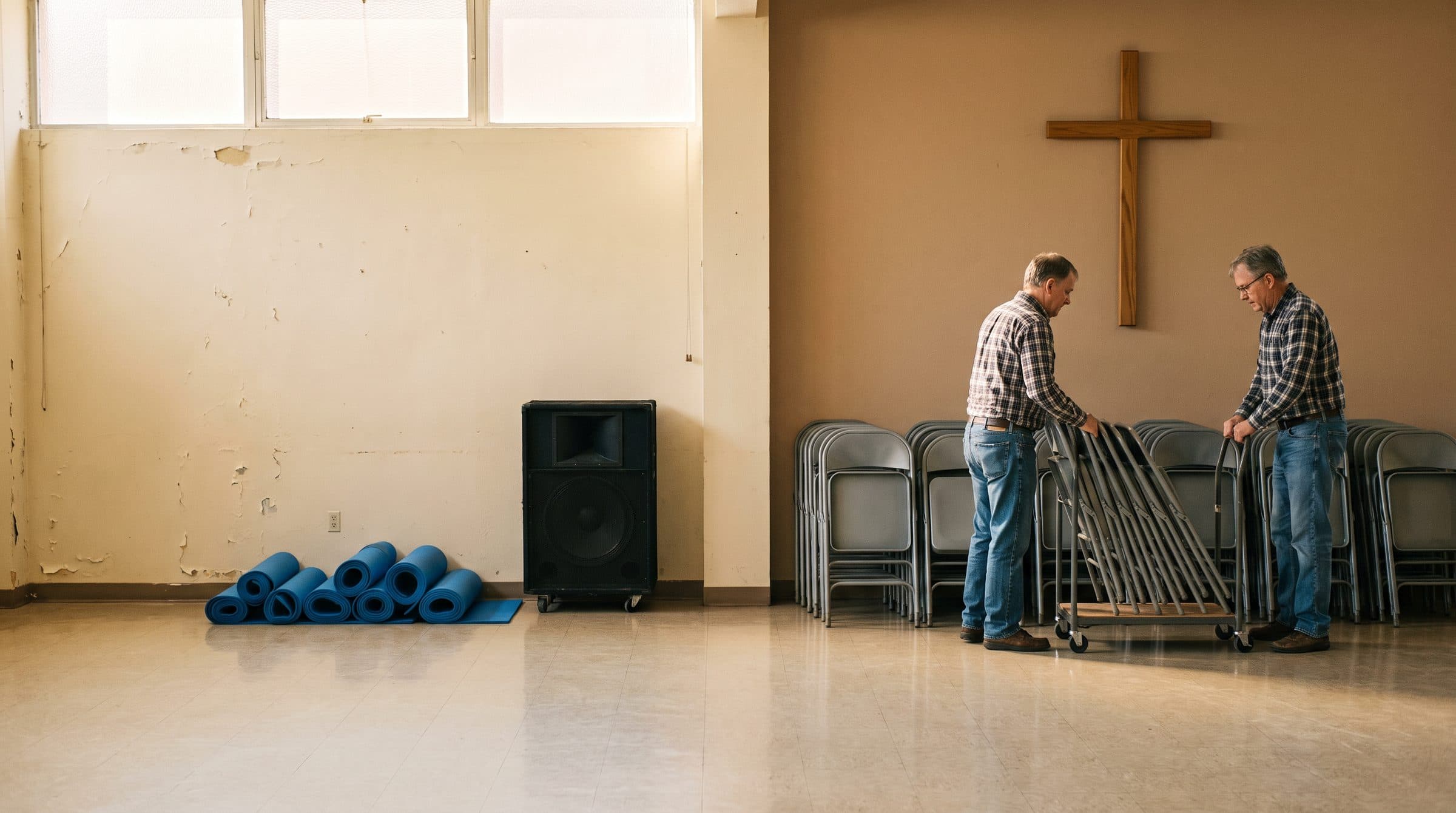
Back when our church was a new church plant, we rented another church's building in Franklin, Indiana, and we weren't the only ones. That church rented its space to several organizations during the week, including a local Zumba class. Every Sunday we set the room up for our service, and I came to realize that how we left the room afterward mattered almost as much as how we set it up.
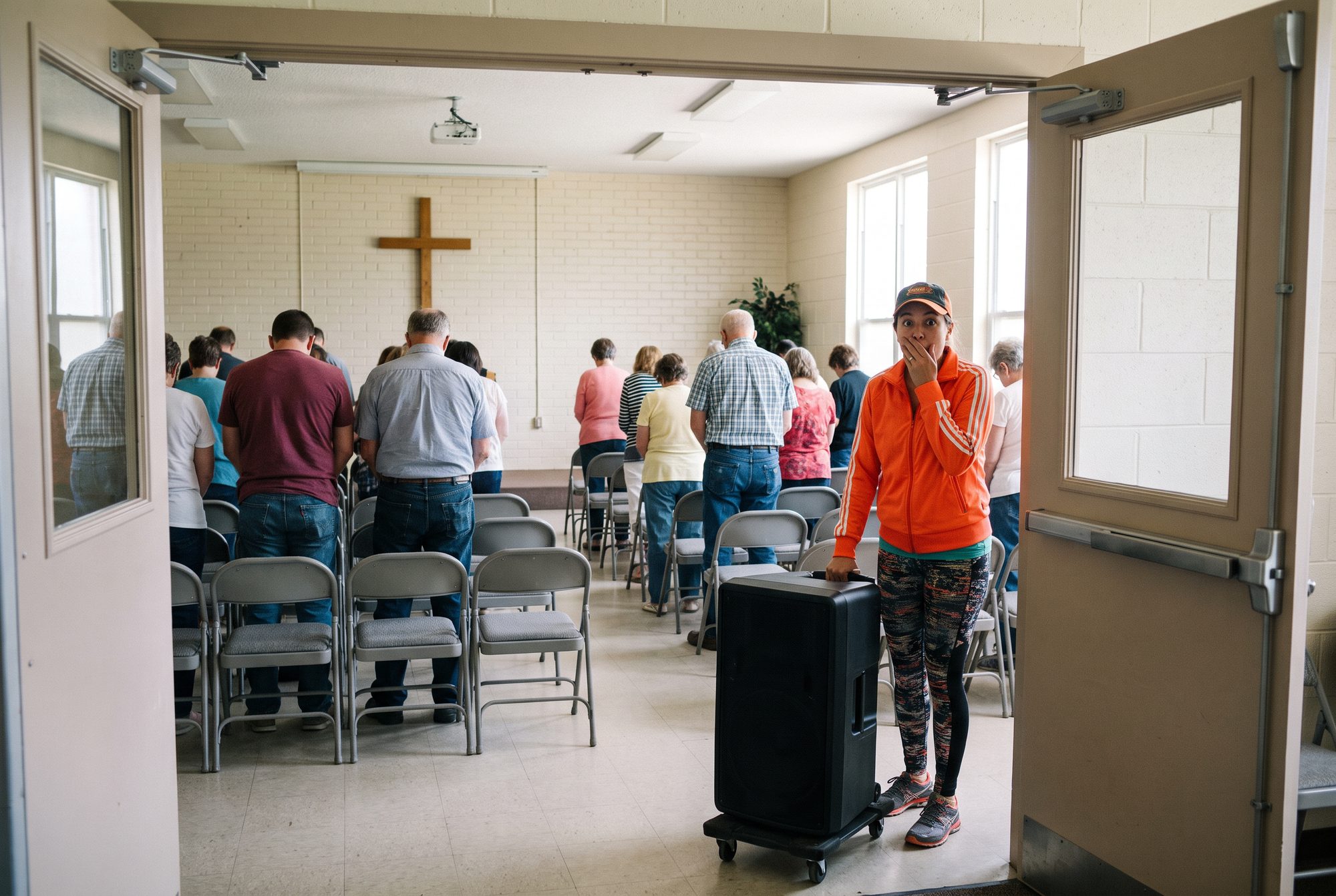
One Sunday, while we were praying to close the service, the Zumba instructor started bringing in her equipment. I think she had simply forgotten that we rented the room too. She was lugging in a giant speaker (that class went all out), and we sometimes joked that if we had joined them after church, we would all have been in amazing shape. Once the service ended, our whole focus was on turning the room over, clearing the chairs off the main floor so her class had the space it needed.
That morning taught me how much sharing church space depends on good space management, clear rental rules and a calendar everyone can see. Many ministries are in the same position we were. Sometimes the other group is an outside renter, and sometimes it's the school or preschool that meets down the hall all week, which may be its own organization or may be a ministry of the church itself. Either way, each group needs the building to work for its own purpose so that it can thrive at what it's there to do. This guide covers how to get there, from the Sunday school room that becomes a preschool classroom on Monday to the church bus and the calendar you plan the year on.
What the church needs from its rooms
On a Sunday morning a church needs more rooms than it might look like from the parking lot. There's the nursery, a room for each children's class, space for the teenagers and the young adults, and enough rooms for several small groups or discipleship groups to meet, which is where a lot of real spiritual growth happens. Then the week brings needs of its own, like a Wednesday night program, choir practice, a baby shower or a funeral that nobody knew about until Monday morning.

What the school needs five days a week
A school has just as important a role to play, and often in just as spiritual a way. Its teachers shape their students' hearts five days a week, and the church does the same thing on that one important day each week. Because they're both doing that work, the church and the school should never feel like they're competing with each other, and that's especially true when it comes to sharing rooms and equipment. What the school needs most from the building is predictability. Each classroom has to be ready before the first family pulls into the drop-off line, set up the way the teacher left it on Friday, with the toys clean, the room warm enough in winter (our guide to winterizing a church building covers that part) and nothing from Sunday left out that a three-year-old can reach.
The handoff from Sunday school to preschool
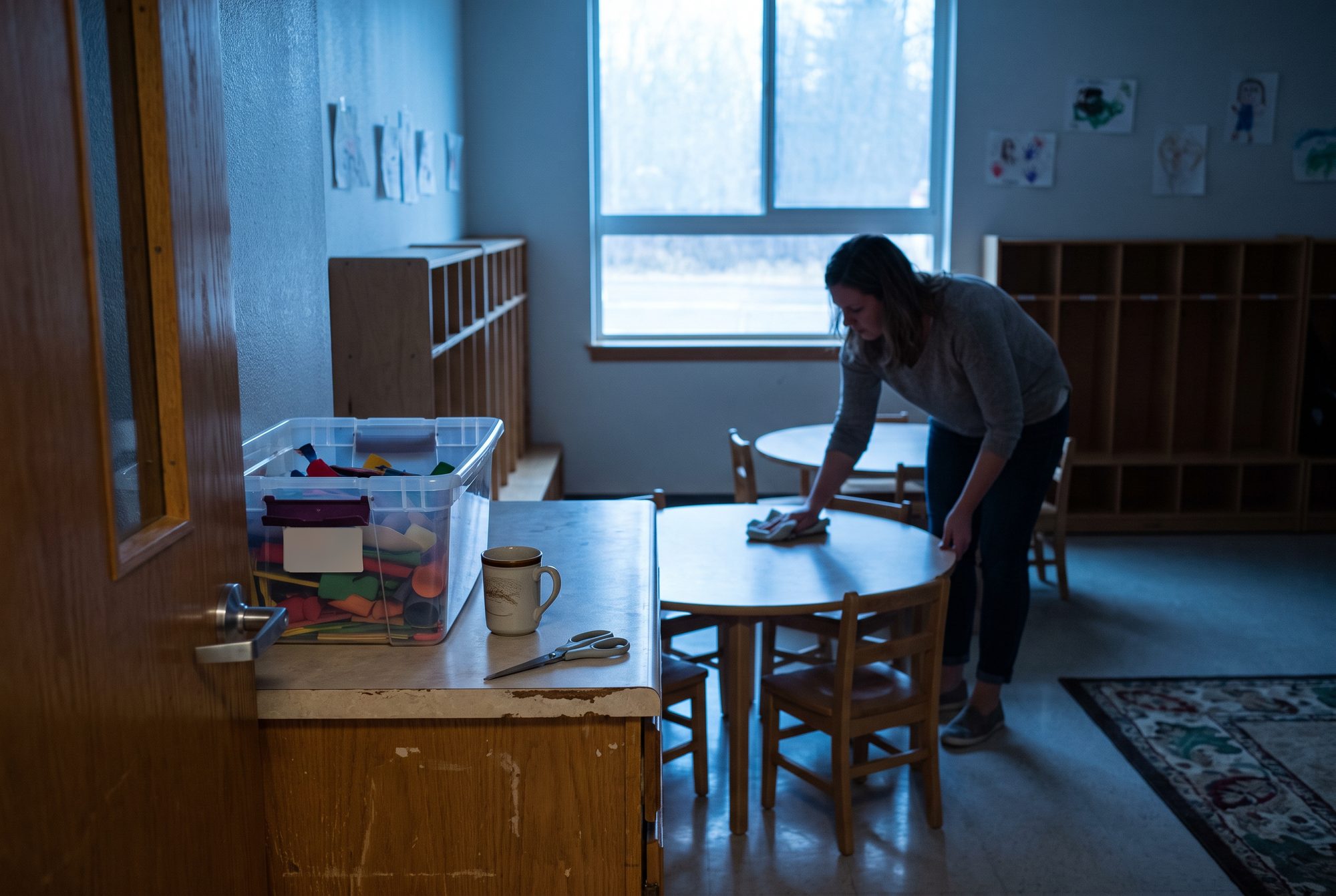
The room where the preschool meets during the week is very often the room where Sunday school meets on Sunday morning, and that handoff is where most of the friction between a church and its school begins. A Sunday teacher moves the tables for a craft, the coffee mug and the grown-up scissors stay on the counter, and the preschool teacher spends the first half hour of Monday putting the room back together.
For a church-run preschool in Indiana, the rules make Monday morning matter even more. The state's rule for registered child care ministries says the parts of a building used for child care "shall at all times be maintained in a clean, safe, and sanitary condition," and that every surface and object the children come into contact with has to be kept clean and sanitary (470 IAC 3-4.5-4), and "at all times" includes the Monday after a busy Sunday. Licensed child care centers follow their own rule, and every state has its own version, so it's worth checking yours with your licensing consultant.
A few habits make the handoff easier for everyone:
- Write down how each shared room should be left and post a photo of it set up the right way, so a new volunteer can see it at a glance.
- Give Sunday teachers their own cart or cabinet, so their supplies don't end up living on the preschool's counters.
- Make sure anything a small child shouldn't reach, like scissors, hot drinks and cleaning products, is put away or locked up before the last adult leaves on Sunday.
- Have someone walk the preschool rooms after the last Sunday event, and again before the children arrive on Monday.
- Make it easy for a teacher to report a problem with the room, like a broken chair or a stain on the rug, so it gets fixed instead of mentioned in the hallway.
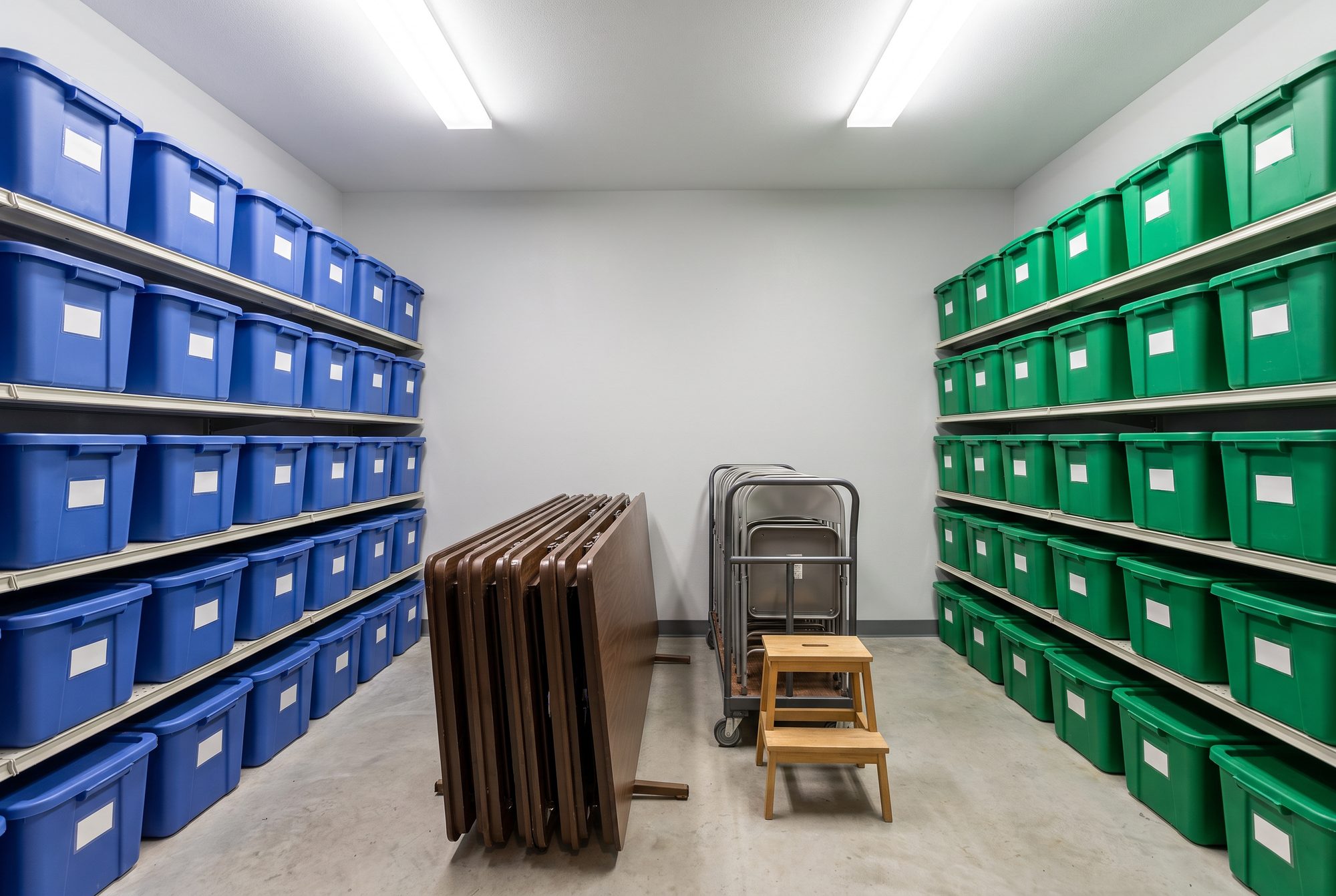
Storage is the quiet part of all this. When each group has its own shelves, clearly labeled and ideally in its own color, nobody has to guess whose supplies are whose or borrow something that belongs to someone else.
How to rent church space to outside groups
Renting church space to outside groups can bring in income and serve your community, and it works best with a written agreement in place. GuideStone, which insures many churches, recommends that a church put one person or team in charge of every facility request and use a written application that covers who will use the facility, which rooms, the dates, the costs and the rules, along with an agreement to repair or replace anything that gets damaged and to hold the church harmless for claims that come from the group's use. It also recommends asking every outside group for evidence of liability insurance that names the church as an additional insured, with a certificate of insurance as proof.
My Zumba story adds one more item to that list, and that's buffer time. A buffer is the gap you leave between the end of one group's time in a room and the start of the next group's, so that the first group can finish and put the room back before the second one walks in. Put your own times in the agreement along with that buffer, and then tell the renter exactly when the room becomes theirs and when they can start setting up. For example, if your service usually ends at 12:15, a 1:00 start for the class's setup gives you a 45-minute buffer, which is enough time for the chairs to come down and for the last few conversations to wrap up without anyone feeling rushed out the door. It also helps to decide ahead of time who holds keys and alarm codes, and to change the codes when a group stops renting.
Sharing the church bus or van
Rooms aren't the only thing a church and a school share. The same bus that picks up senior citizens at the retirement home on Sunday might take the kids on a field trip on Monday and to a volleyball game on Tuesday, so it belongs on the same calendar as the rooms, with a named driver for every trip.
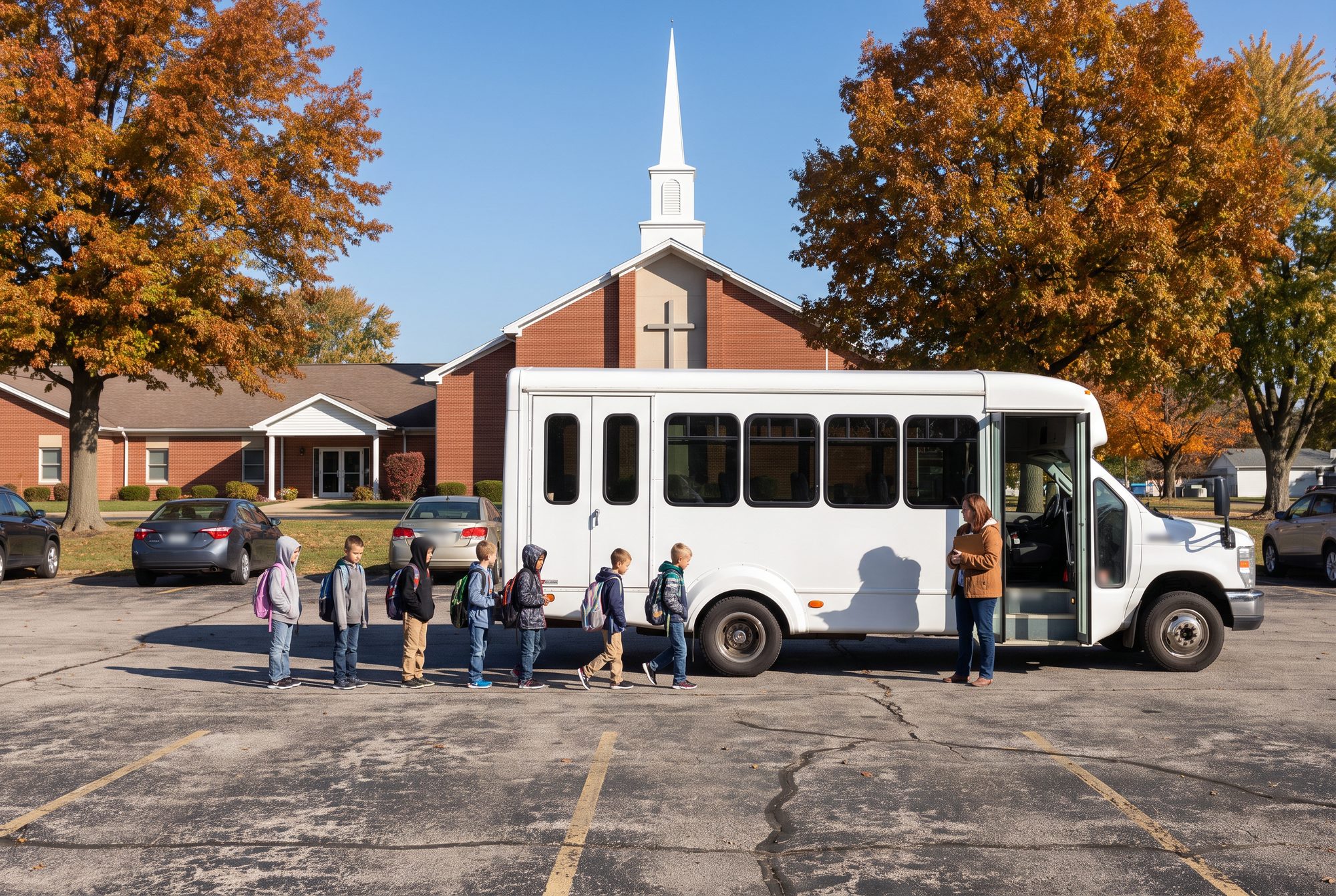
It's worth checking who's allowed to drive it, too. The Federal Motor Carrier Safety Administration says that when a vehicle is designed to transport 16 or more passengers, including the driver, the driver must hold a commercial driver's license with a passenger endorsement, and it notes that this applies to faith-based and educational organizations as well. A volunteer who drives the smaller church van every week may not be licensed to drive the bigger bus, so match each driver to the vehicle before the trip, and ask your insurer whether the school's use of a church vehicle is covered.
Put every room and vehicle on one calendar
A lot of churches still handle all of this the way it's been done for years. Someone painstakingly enters a year's worth of dates into the church calendar while making sure none of those events conflict with the school's in a given room or for a given piece of equipment. It works until that person is out sick, or until the school adds a spring concert and nobody checks whether the fellowship hall is free.
What both organizations need is one shared way of scheduling church rooms, equipment and vehicles. Every event should book the rooms it uses, the equipment it needs and any vehicle that goes with it, along with buffer time to set up and tear down, and both the church and the school should be able to see the whole calendar. That way a clash shows up when someone tries to book, instead of on the morning of the event.

It also helps to plan the year together. Sit down once a year, before either calendar fills up, and put the school's first day, breaks, programs and graduation next to the church's Christmas Eve services, Easter week, vacation Bible school and special events. Add the weekly recurring events after that, and the renters last. Agree on a few priorities in advance, such as which group has the gym on weekday afternoons, so that a conflict already has an answer before anyone has to argue about it.
That's what the calendar in WiseHQ, our facility management software for churches and schools, is for. Each event books its rooms and equipment with setup and teardown time included, and if the fellowship hall is already taken, WiseHQ catches it when someone tries to book it, so the two groups can work it out ahead of time. If you add Vehicles, the bus goes on the same calendar too. And when a teacher or volunteer finds a problem with a room, they can scan the QR code by the door and report it in a few seconds, and it goes straight to the right person with the room already on it.
Your checklist for sharing church space
- Name one person who approves every room, equipment, vehicle and rental request.
- Put the school year and the church year on one calendar once a year, before either fills up.
- Book every event with its rooms, equipment and vehicles, plus setup and teardown time.
- Write down how each shared room is left, with a photo, and post it in the room.
- Give each group its own labeled storage, and lock away anything children shouldn't reach.
- Walk the preschool rooms after the last Sunday event and again before the children arrive on Monday.
- Use a written facility use agreement for outside groups, with a certificate of insurance that names the church.
- Tell renters your times and theirs in writing, including the buffer between groups and when they can start setting up.
- Book the bus or van on the same calendar with a named driver, and check what license it requires.
- Give teachers, volunteers and renters one easy way to report a problem with a room.
When all of this works, nobody notices. The service ends with the closing prayer instead of a speaker rolling through the door, and on Monday the preschool opens on time in a room that looks exactly the way the teacher left it.
One calendar for the church, the school and every renter
In WiseHQ, every event books its rooms and equipment with setup and teardown time included, and a room that's already taken is caught when someone tries to book it.