
A church facility manager job description that you can copy
A church facility manager job description to copy, with a free Word template: what the job covers, what to pay, and how to start when it's a new role.
By Tom Moore · November 12, 2026 · 10 min read
If your church is writing a job description for its first facility manager, there's a good chance that someone has already been doing the job for years under a different title. It might be the church administrator who knows which breaker to flip, or the staff member who lets every contractor in on top of their real job. Writing the job down will show you how much that person has really been doing.
That's how it was when I became the first official facility director at a private school in Georgia. (Some places call the job facility director and others call it facility manager, but it's the same work.) Someone had handled the facility work before me, but under another title and alongside other jobs for the school, so in a real sense I was creating the position as I went. It was my first time in the role, too, which meant the school and I were working out what the job would include together. I had an extensive cleaning background, so at the very beginning I spent a couple of hours a day cleaning different areas of the building myself, until we hired a cleaning company to take that over.
Below is a church facility manager job description that you can copy and make your own, along with what church facility managers are paid and what I'd tell any church that's creating the role for the first time. There's a free Word version at the end.
What church facility management involves
Church facility management means keeping the building safe, in good repair and ready for whatever is on the calendar. A church custodian keeps the building clean, while the facility manager keeps track of everything that keeps it running: the repair requests, the maintenance schedule, the inspection dates, the contractors, the keys and the budget for the big repairs that are coming.
Most of the day goes to working through requests. At the school, each day started with the work orders that had come in, either by email or written down on the notepad that I carried, and I worked through them in the order that they arrived, with the higher-priority ones always going first. In the evenings I often stayed for whatever was happening on campus, so that if something went wrong with the building during an event, someone who could fix it was already there.
The job also tends to grow into whatever the place needs. A while after I started, the school needed someone to drive its only bus, so I took that on as well. Every morning and afternoon, on top of my eight-hour day, I drove a route with three stops where parents met me with their kids, which let about 10 to 12 students who lived farther away come to the school. No job description can list every surprise like that, but yours should say plainly that the job includes evenings, weekends and the occasional extra duty.

A church facility manager job description that you can copy
Change the parts in brackets to fit your church, and leave out anything this person won't be doing. The Word version at the end has the same text, ready to edit.
Church facility manager
- Reports to: [the executive pastor, church administrator or business manager]
- Hours: [full time, about 40 hours a week], including some evenings and weekends for events and building emergencies
- Pay: [$__ to $__ a year]
About the job. [Church name] is looking for a facility manager to keep our buildings and grounds safe, in good repair and ready for worship, ministry and the community groups that we host. You'll take care of repairs and preventive maintenance, work with our contractors, keep our inspections current and help us plan for the big repairs ahead, so our staff and members can put their attention on ministry.
Repairs and requests
- Keep one list of every repair request, whether it comes in by email, a phone call or someone stopping you in the hall, and work through it by priority.
- Make the repairs that you're qualified to make, and bring in a licensed contractor for the electrical, plumbing, HVAC and roofing work beyond that.
- Let the person who reported a problem know when it's fixed.
Preventive maintenance
- Keep a maintenance schedule for the HVAC, roof, plumbing, kitchen equipment, grounds and everything else that needs regular care, and make sure each job gets done on time.
- Change the HVAC filters, test the emergency lights and keep up the other routine checks [or see that the custodian or a contractor does].
Inspections and safety
- Keep track of every inspection and certificate that the building needs, such as the fire alarm, sprinklers, fire extinguishers, kitchen hood, boiler, elevator and backflow preventer, and schedule each one before it's due.
- Keep the keys, alarm codes and access list current, so you always know who can get into the building.
- Know where the water and gas shutoffs, electrical panels, fire extinguishers and AED are, and keep the building's emergency plan up to date.
- Fix or report a safety hazard the same day that you find it.
Events and rooms
- Work with [the church office] on the calendar so each room is set up, heated or cooled, and unlocked for services, classes, weddings, funerals and outside groups.
- Be on site or on call during large events.
Contractors and cleaning
- Get quotes, schedule contractors and check their work, and keep their insurance certificates and service contracts on file.
- Oversee the custodian, cleaning company or volunteer cleaning team.
Budget and planning
- Prepare the yearly building budget with [name], and keep track of what's spent.
- Keep a list of the big-ticket items, like the roof, the HVAC units and the parking lot, with their ages and rough replacement costs, so the church can plan for them.
- Meet with [name] regularly to go over priorities and concerns.
Other duties
- [If this job includes it: keep the church vehicles serviced and ready for trips.]
- Other building-related duties as needed.
What we're looking for
- Someone who shares our beliefs and core values [and is in agreement with our statement of faith].
- A positive attitude and a strong work ethic.
- Experience maintaining or managing a building, such as a church, school, office or apartment complex, with a working knowledge of HVAC, plumbing and electrical systems.
- Organized enough to keep track of many requests and dates at once.
- Clear and patient with staff, volunteers, members, renters and contractors.
- Available some evenings and weekends, and on call for building emergencies.
- Trustworthy with keys and alarm codes, and willing to pass a background check, because the job comes with access to the whole building, including the children's areas.
- Able to lift [50] pounds and use a ladder safely.
- A valid driver's license, for runs to pick up parts and supplies.
To apply: Send [a résumé, a short note about yourself and two references] to [name and email] by [date].
If you're building the maintenance list from scratch, our preventive maintenance schedule for a church building has 43 recurring jobs and how often each one comes due, and our church building inspection checklist covers the inspections and who performs them.
What to pay a church facility manager
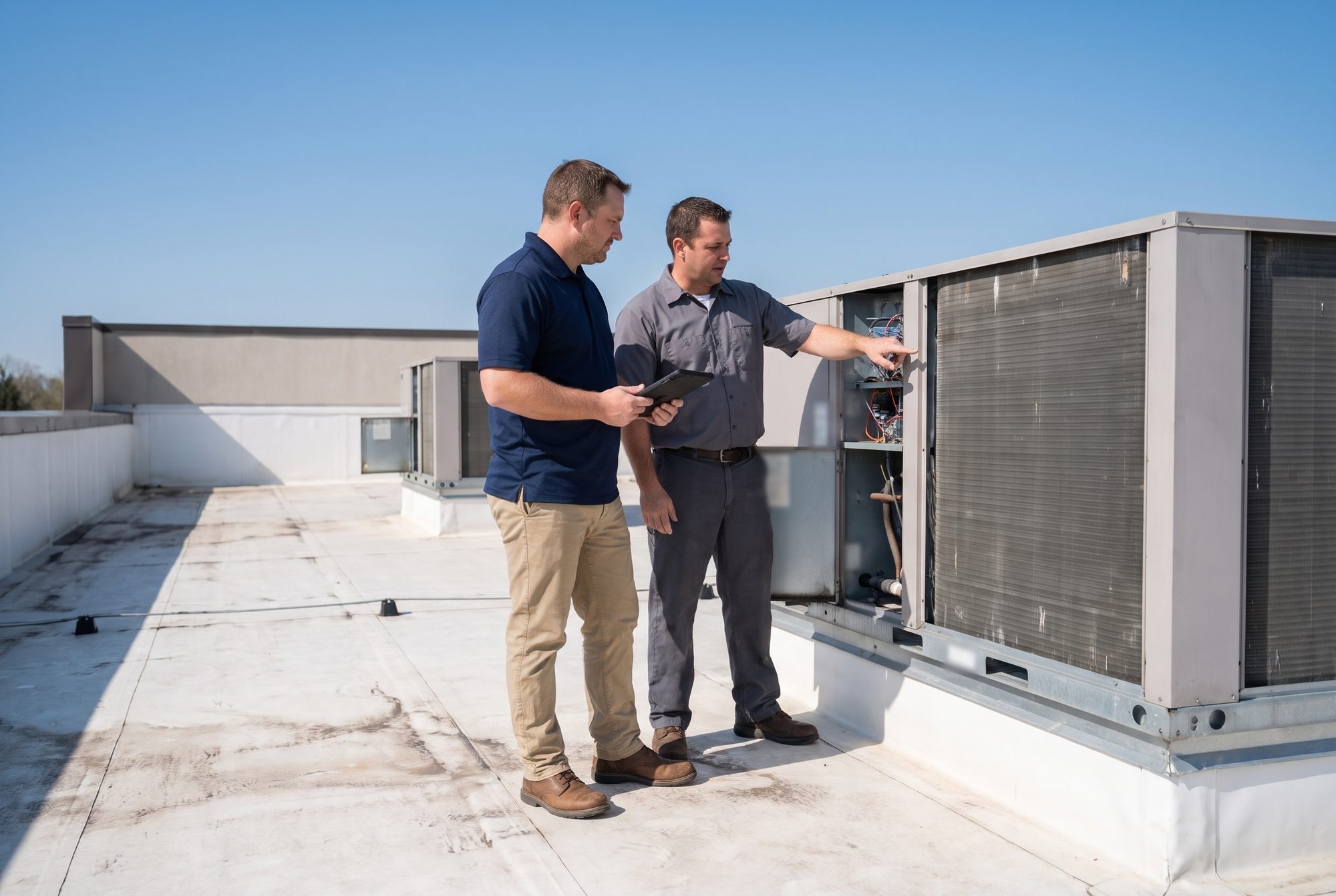
The Bureau of Labor Statistics surveys pay across the country every year, and in its latest figures, from May 2025, the median pay for facilities managers who work for religious organizations is $77,380 a year, or about $37.20 an hour. (The median is the middle of the range, so half earn more and half earn less.) That's well below the median for facilities managers in every kind of organization, which is $106,660, and the middle half of all facilities managers earn between $82,020 and $138,870 a year.
Those figures are for people whose main job is managing a facility. Plenty of churches fill this role with someone who does most of the hands-on maintenance themselves, often part time. For that kind of job, the closer comparison is general maintenance and repair workers, whose median at religious organizations is $21.17 an hour. Pay also runs higher in cities and lower in small towns, so look up your own state and metro area on that same BLS page, and see what nearby churches, schools and property managers are paying before you set a range.
What to look for when you hire
The first thing that any organization should look for when it hires, and a church especially, is whether the person is a match for your statement of faith, your beliefs and the core values that your church or school holds. In my other business, a commercial cleaning company, I always hire based on core values. I always say we can train for aptitude, but we can't train attitude. I heard that somewhere, and I've used it with success ever since. Ninety percent of what you're looking for is someone who matches your core values and has a great attitude, along with a strong work ethic.
After that, do your research. Call their previous employers and former bosses to find out what kind of person they are, and maybe what some of their struggles or flaws are, and go from there.
Starting the job when it's new
When a church creates this position for the first time, expect the job description to change during the first year, because nobody knows yet exactly what the job will turn out to be. That's how it was at the school: the school and I learned what the role included together, and I filled in wherever the building needed me, from cleaning in the early days to driving the bus later on.
My first few months were the busiest of my whole time at the school. I'd come from Denver, where a summer day was about 80 degrees with no humidity, to 104 degrees and heavy humidity in Georgia, and right away there were about 30 large repairs waiting on furniture in different classrooms. Some pieces needed to be rebuilt and a lot of them needed painting, but we didn't have a workshop, so we carried each piece outside and painted it on tarps in the grass. The beautiful outdoors, in the Georgia heat, was my workshop. All the while, I was learning the building and coming up with a system for everything that was already there when I arrived.
I don't think there's a way to make the first month of any new job easy. The best thing that you can do is keep a positive attitude, set up a system to track your work and your progress, and be able to show your boss what you've done, so you're all on the same page.
That last part depends on talking often. I worked under three different headmasters during my time there, and each of them was understanding and someone who I felt I could trust, but I think the key in any working relationship is open lines of communication. Frequent meetings with your boss let you learn what their priorities are for the building, which big-ticket items they want to spend the capital budget on, and what concerns they have about any area of the campus. Frequent meetings with clarity go a long way, and after that, it's on you to deliver on their timetable. At a church, that usually means a regular meeting with the executive pastor or administrator, with the list of open requests and upcoming projects in front of you both.

Before you post the job
- Walk the building with whoever has been doing the work, and write down everything that they handle, including the things that nobody ever asked them to do.
- Decide what this person will do with their own hands and what goes to contractors, the custodian or volunteers.
- Be honest in the posting about the evenings, weekends and on-call duties, and about anything extra that the job includes.
- Set the hours, and look up the going pay in your area.
- Decide who they'll report to and how often you'll meet.
- Plan the reference calls and the background check, and keep a list of who has which keys and alarm codes.
Download the template
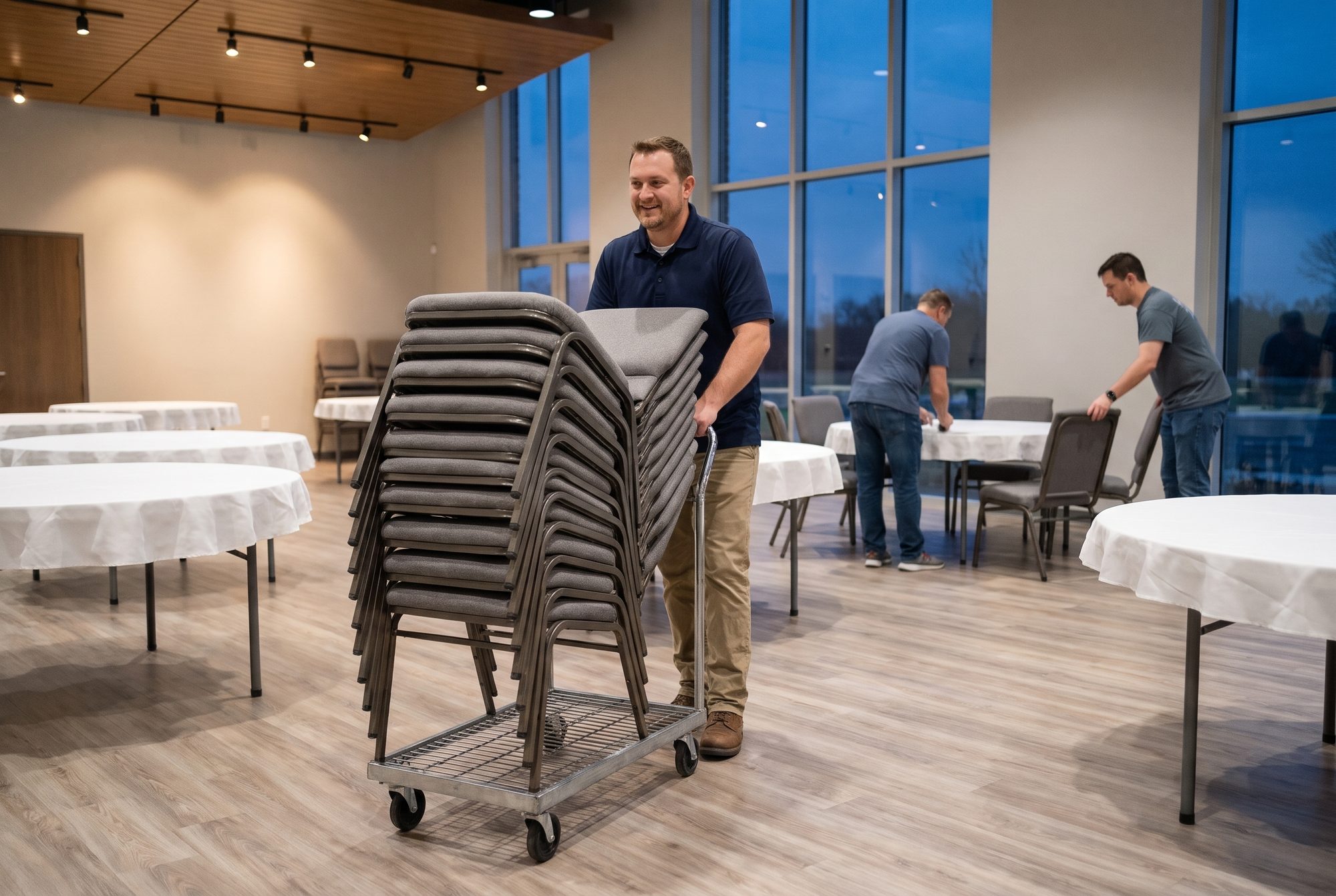
The church facility manager job description (Word) has everything above, ready to edit. It opens in Word, Pages or Google Docs, and the parts in brackets are the ones to change. If you'd rather print it as it is, there's also a PDF version.
Keeping track of the work
When I started at the school, I kept track of the requests from my email and my notepad. In WiseHQ, anyone who spots a problem can report it by scanning the QR code in the room, and the report lands on the same work order list as everything else, where your facility manager can set its priority. The maintenance schedule puts each recurring job in front of the person assigned before it's due, and when you upload an inspection certificate, WiseHQ AI suggests its expiry date for you to confirm, then reminds your owners and admins 30, 14 and 3 days before it runs out. See how WiseHQ works for churches.
Your first facility manager will end up adding to this job description just by doing the job. Plan to sit down together after the first year and update it.
Give your facility manager one list
WiseHQ keeps the repair requests, the maintenance schedule and the inspection dates in one place, and anyone who spots a problem can report it by scanning the QR code in the room.